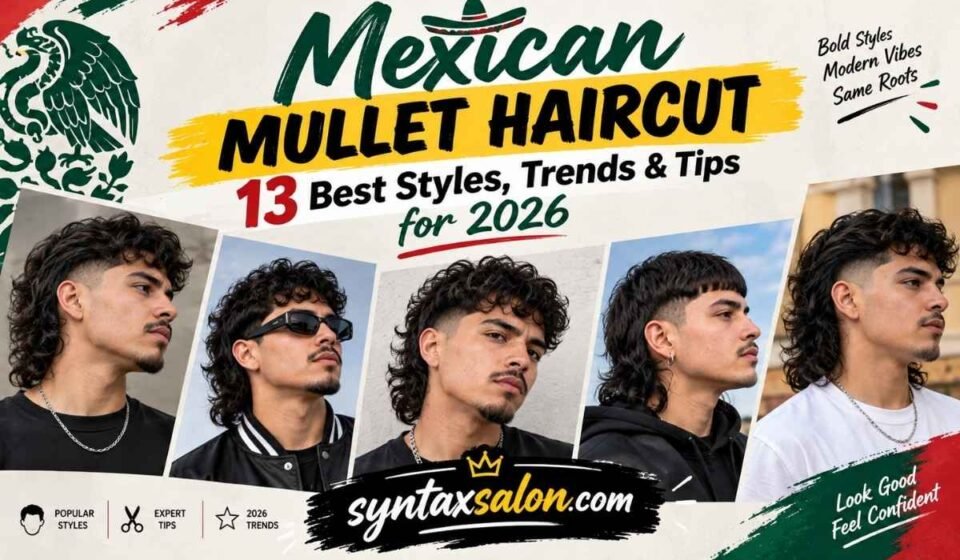

You’ve probably scrolled past a dozen versions of this cut on your feed this week alone — faded sides, a full textured top, and that unmistakable length trailing down the back. Maybe you liked one and had no idea what to actually call it when you sat down in the barber’s chair. Or maybe you got a version of it once and it grew out looking nothing like what you asked for.
That’s exactly what this guide fixes. Below, you’ll find every major Mexican mullet haircut variation for 2026, how to match one to your face shape and hair type, the exact words to use with your barber, and the mistakes that turn a sharp cut into a messy one.
Quick Answer
A Mexican mullet haircut pairs short, faded sides (usually a burst fade or taper) with a textured, voluminous top and noticeable length left in the back. It’s rooted in Takuache barbershop culture and grew mainstream through Latin music artists, and it works on straight, wavy, curly, and thick hair alike. Popular 2026 variations include the burst fade, taper fade, Edgar fringe, and V-back styles.
Understanding the Mexican Mullet Haircut
A Mexican mullet haircut features shorter hair on the top and sides while maintaining noticeable length in the back. Unlike traditional mullets, modern Mexican-inspired versions often include taper fades, burst fades, textured crops, or Edgar-inspired fringes that create a cleaner and more fashionable appearance.
The haircut embraces contrast. The front stays structured and sharp, while the back keeps its movement and length. That combination is what gives the style its edge — it reads as intentional, not accidental, which is a big part of why it feels current instead of retro.
Where the Mexican Mullet Comes From
This cut didn’t start on a runway. It grew out of Takuache culture, a style rooted in Mexican-American communities across Texas and the broader Southwest, where cowboy boots, fitted jeans, and a sharp fade paired with length in the back became a recognizable look. Barbershops in these communities were cutting this style long before it had a name that trended nationally.
Latin music helped push it into the mainstream. Artists like Peso Pluma brought the look to a global audience, and social platforms did the rest — clips of the cut being styled, faded, and shown off racked up views and sent thousands of guys into barbershops asking for “that haircut.” A Mexican mullet meme or two along the way only added to the visibility, turning the style into shorthand for a specific cultural moment as much as a specific haircut.
Mexican Mullet vs. Classic Mullet vs. Takuache Haircut
These terms get used interchangeably online, but they’re not quite the same thing.
- Classic mullet: Short on top and sides, long in back, usually with a fairly uniform, scissor-cut finish and minimal fading. This is the 1980s original.
- Mexican mullet: Builds on the classic shape with modern barbering — a burst fade or taper on the sides, a textured and voluminous top, and a shaped, deliberate back section rather than an unstructured tail.
- Takuache haircut: A broader category that this style sits inside. It covers any short-sides, long-back cut tied to Takuache fashion, of which the Mexican mullet is one specific, textured, fade-heavy version.
- Modern mullet haircut: An umbrella term for any updated 2026 take on the mullet shape, regardless of cultural origin — the Mexican mullet is one popular branch of that wider modern mullet family, distinguished by its fade style and back-flow structure.
Why the Mexican Mullet Haircut Has Become So Popular
The Mexican mullet haircut has picked up momentum because it blends classic mullet DNA with modern styling technique. Its mix of cultural roots, flexibility, and current barbering trends makes it a go-to for guys who want something bold without looking out of place at work or school.
- Rides the broader wave of retro and vintage hairstyles coming back into fashion
- Adds modern upgrades like precise fades, texture, and clean transitions
- Reflects cultural identity while staying aligned with current style trends
- Customizable with taper fades, burst fades, or heavily textured layers
- Works across straight, wavy, curly, and thick hair
- Suits both low-key everyday looks and bolder statement versions
- Shows up constantly on social feeds, which keeps fueling its popularity
- Strikes a balance between individuality and a groomed, put-together look
Key Features That Make This Haircut Unique
Sharp Contrast Between Front and Back
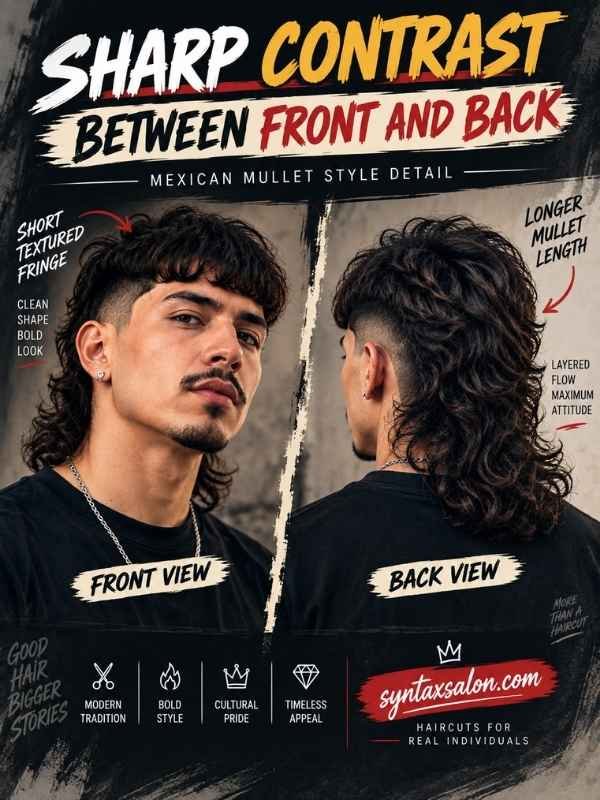
One of the defining elements of a Mexican mullet haircut is the visible difference between the shorter front section and the longer back. That contrast creates the signature silhouette that makes the cut instantly recognizable, even from across the room.
Modern Fade Techniques
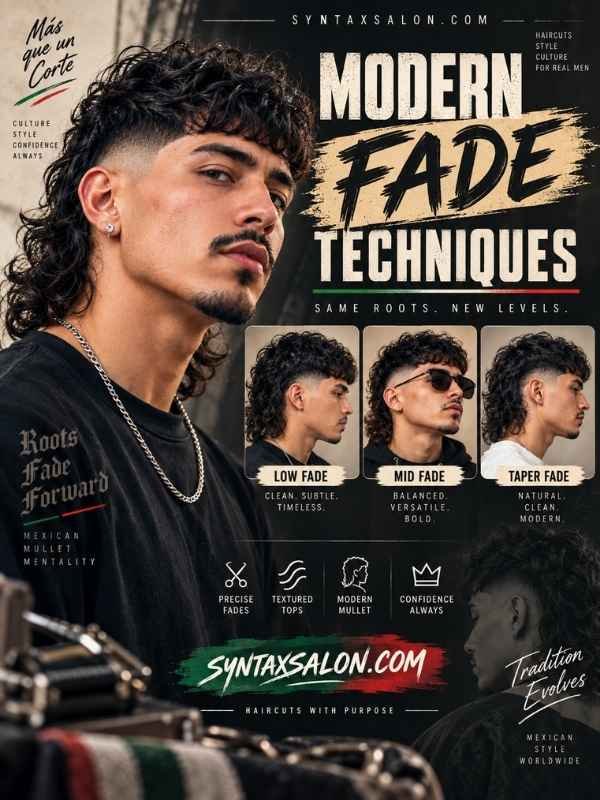
Most Mexican mullet variations lean on taper fades, burst fades, or skin fades. These techniques add structure to the sides while keeping the whole haircut feeling fresh rather than dated.
Strong Texture and Movement

Layering does a lot of the work here, building volume and texture on top. The textured finish makes the cut look effortless while playing up your hair’s natural movement instead of fighting it.
Customizable Styling Options

From curly and wavy hair to straight and thick strands, the Mexican mullet adapts to almost any starting point. That’s a big part of why barbers keep recommending it across such a wide range of clients.
Trending Mexican Mullet Haircut Styles
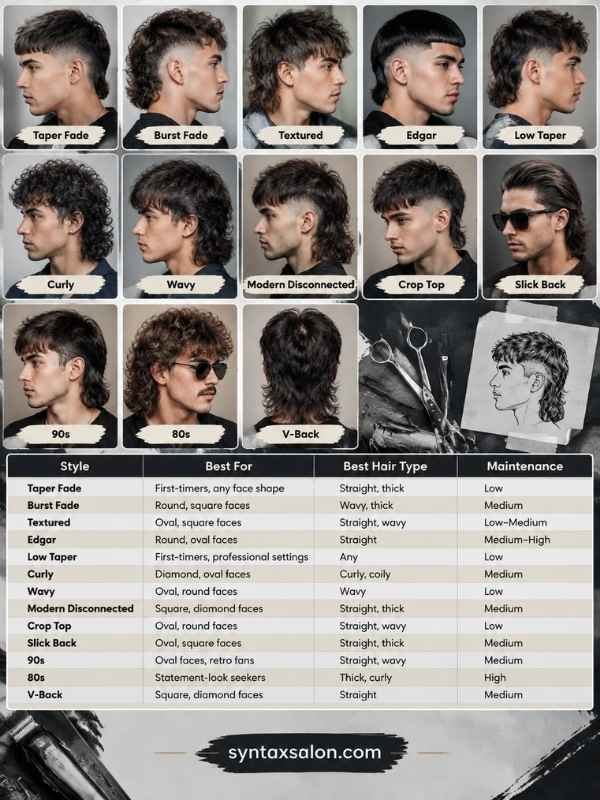
Here’s a quick side-by-side before we get into each style in detail:
| Style | Best For | Best Hair Type | Maintenance |
| Taper Fade | First-timers, any face shape | Straight, thick | Low |
| Burst Fade | Round, square faces | Wavy, thick | Medium |
| Textured | Oval, square faces | Straight, wavy | Low–Medium |
| Edgar | Round, oval faces | Straight | Medium–High |
| Low Taper | First-timers, professional settings | Any | Low |
| Curly | Diamond, oval faces | Curly, coily | Medium |
| Wavy | Oval, round faces | Wavy | Low |
| Modern Disconnected | Square, diamond faces | Straight, thick | Medium |
| Crop Top | Oval, round faces | Straight, wavy | Low |
| Slick Back | Oval, square faces | Straight, thick | Medium |
| 90s | Oval faces, retro fans | Straight, wavy | Medium |
| 80s | Statement-look seekers | Thick, curly | High |
| V-Back | Square, diamond faces | Straight | Medium |
Taper Fade Mexican Mullet
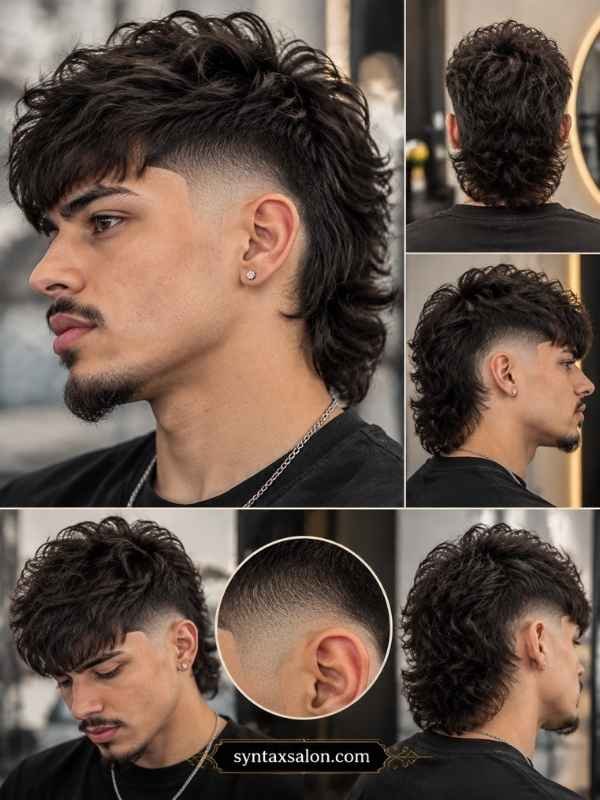
The taper fade version offers a balanced, modern look by gradually shortening the hair around the ears and neckline while keeping real length in the back. That smooth transition feels clean and polished without tipping into dramatic territory. It’s a strong pick for guys who want the mullet energy but still need something that works for school or the office.
Burst Fade Mexican Mullet
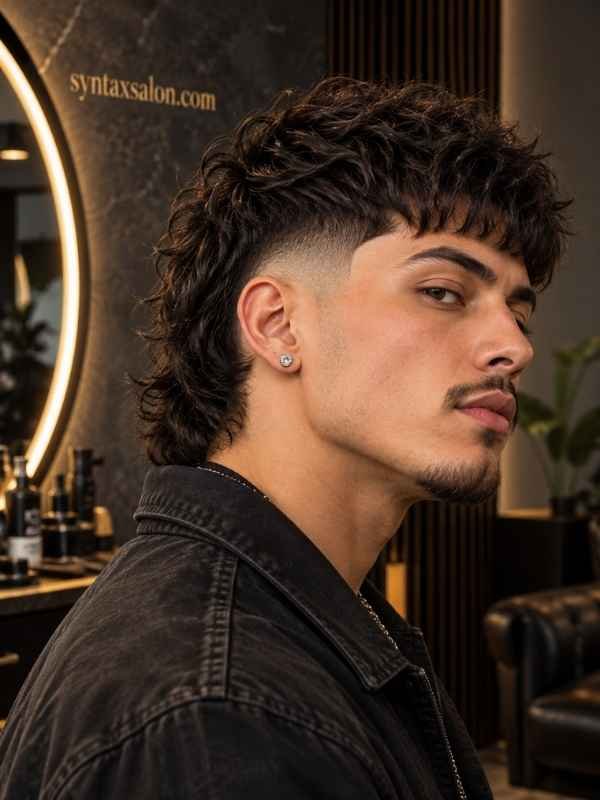
The burst fade curves around the ear instead of running in a straight line, which creates a rounded fade pattern with more visual punch. Paired with the mullet’s back length, this is one of the sharpest-looking variations you’ll find right now. It also grows out faster than a standard taper, so plan on more frequent barber visits if you go this route.
Textured Mexican Mullet
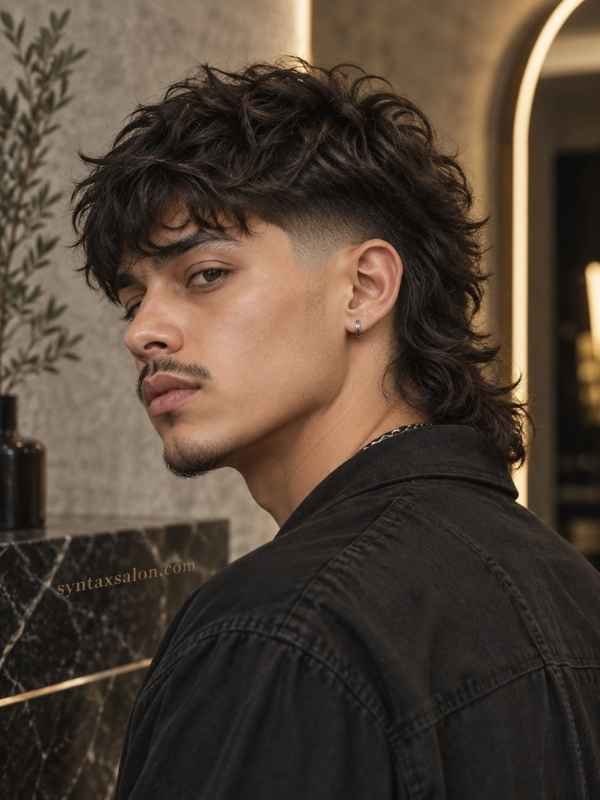
The textured version leans on carefully layered hair across the top and back to build movement and dimension. Those layers add natural volume and give the cut a relaxed, effortless feel rather than a flat, styled-to-death look. A little texture spray or cream is usually all it takes to define the layers and keep them holding shape through the day.
Edgar Mexican Mullet
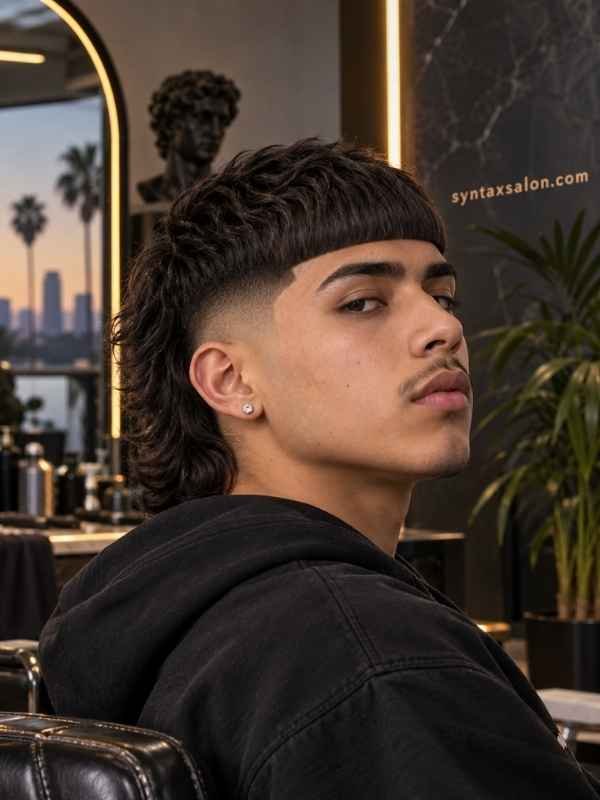
This one combines the bold, straight-line Edgar fringe with the length and movement of a mullet. The sharp fringe up front creates a structured, clean edge, while the longer back adds contrast and personality. It’s especially popular with younger guys chasing a look that stands out immediately, though it does need the most upkeep of any style on this list since the fringe has to stay crisp.
Low Taper Mexican Mullet
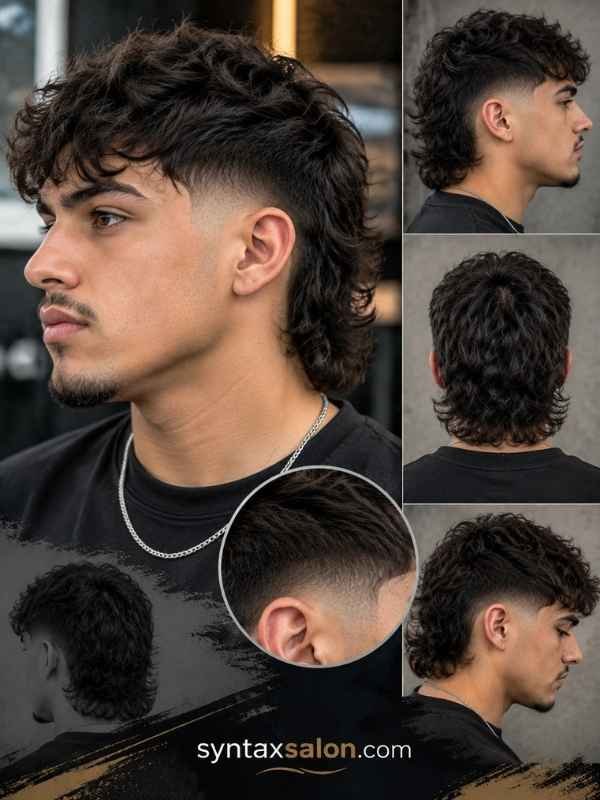
The low taper is the cleaner, more subtle take on the classic shape. The fade sits close to the ears and neckline, blending gradually without removing too much length overall. It keeps things neat while still showing off the mullet silhouette at the back, which makes it a favorite for first-timers who want something wearable in professional settings.
Curly Mexican Mullet
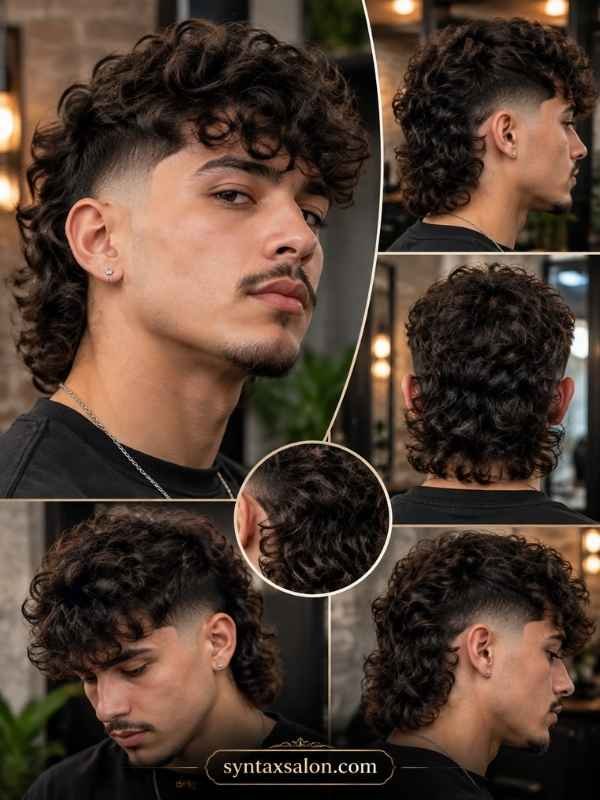
This variation puts your natural curls front and center, building a cut full of volume, texture, and personality. The curls add motion through the top and back, and when paired with faded or tapered sides, the contrast really pops. It’s a great option if you want to work with your natural texture instead of fighting it every morning.
Wavy Mexican Mullet
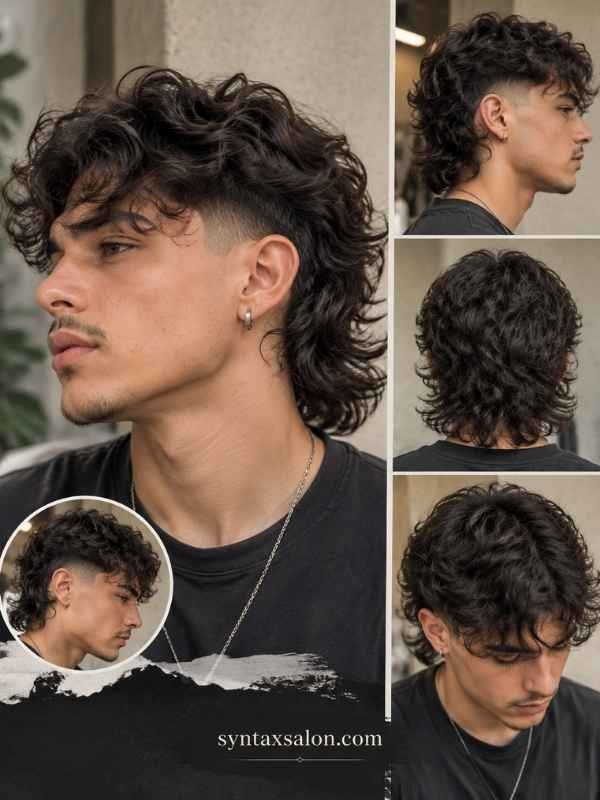
Naturally wavy hair gives this version a relaxed, laid-back feel without sacrificing style. The waves add texture and dimension that help the back flow smoothly, creating that effortless-movement look barbers love to show off. It’s one of the lower-maintenance options here, since the waves do most of the work on their own.
Modern Disconnected Mexican Mullet
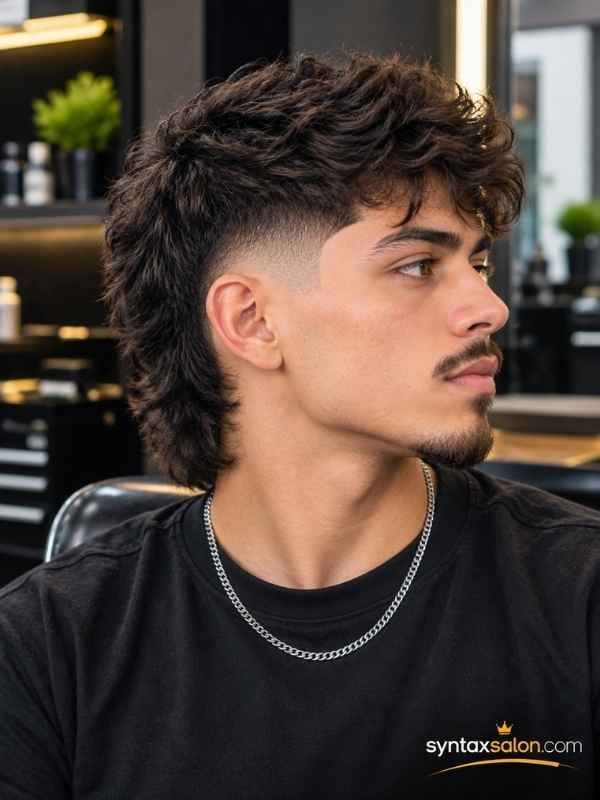
This one makes a statement through strong contrast and a clean break between the longer top and the shorter, faded sides. That disconnected effect adds real depth to the shape and makes the mullet outline stand out even more. It suits guys who lean into fashion-forward cuts and don’t mind a little extra attention.
Crop Top Mexican Mullet
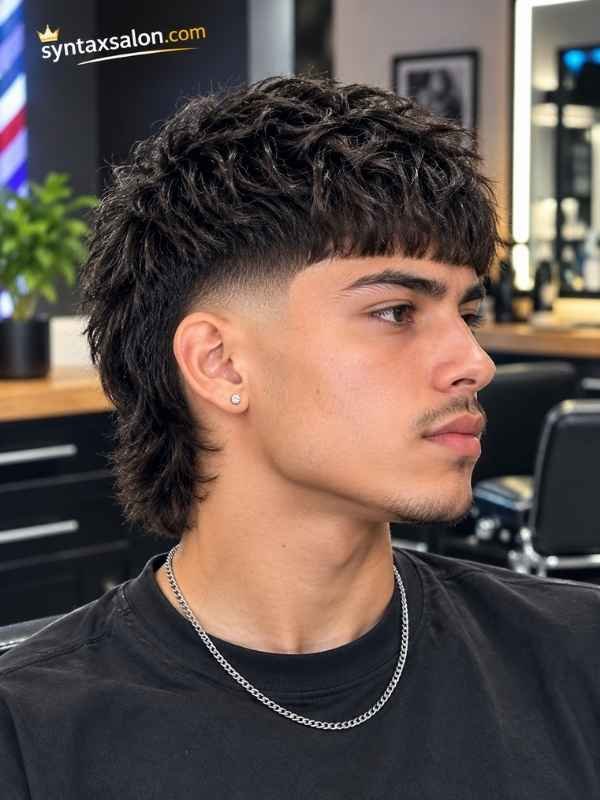
The crop top blends a short, textured fringe with the classic longer length at the back for a sharp, street-style finish. The cropped top brings structure up front, while the mullet section keeps the overall look bold. It’s popular with younger guys who want a trendy, relatively low-maintenance cut with real personality.
Slick Back Mexican Mullet
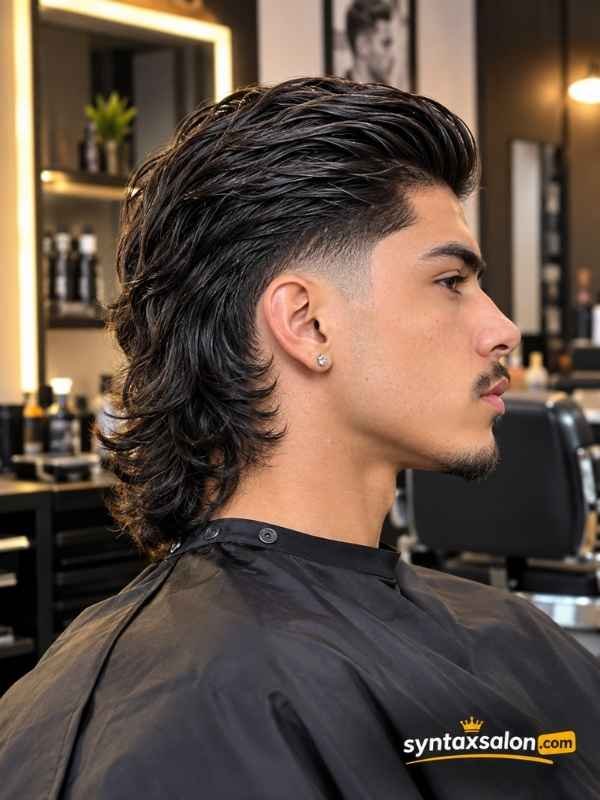
This version smooths the top backward for a clean, polished finish while keeping the back length intact. The slicked-back top adds a bit of sophistication, making it wearable in slightly more formal settings, while the longer back keeps the mullet identity fully intact.
90s Mexican Mullet
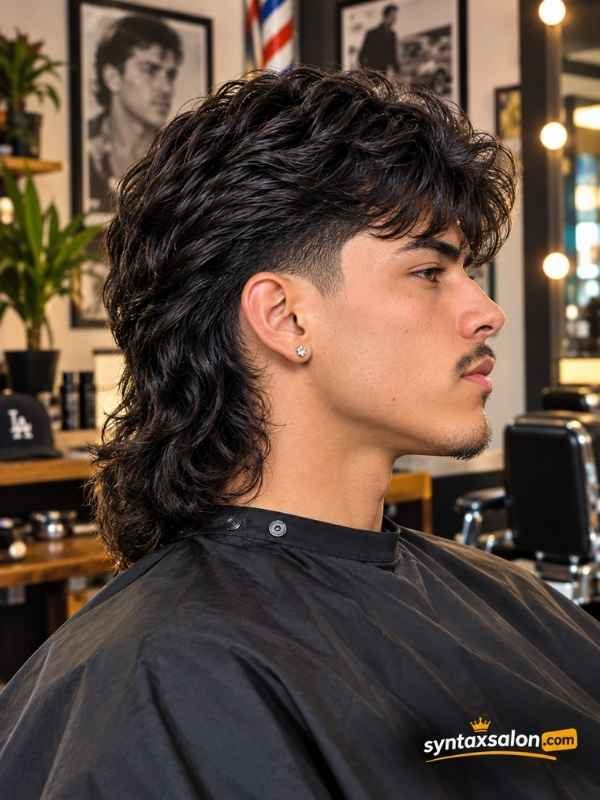
The 90s take goes fuller and rounder on top, with softer, less aggressive fading on the sides. It’s closer to the original mullets worn by musicians and athletes back then, just cleaned up with current barbering tools. Expect more overall length and a gentler transition from top to sides than you’d get with a sharper fade style.
80s Mexican Mullet
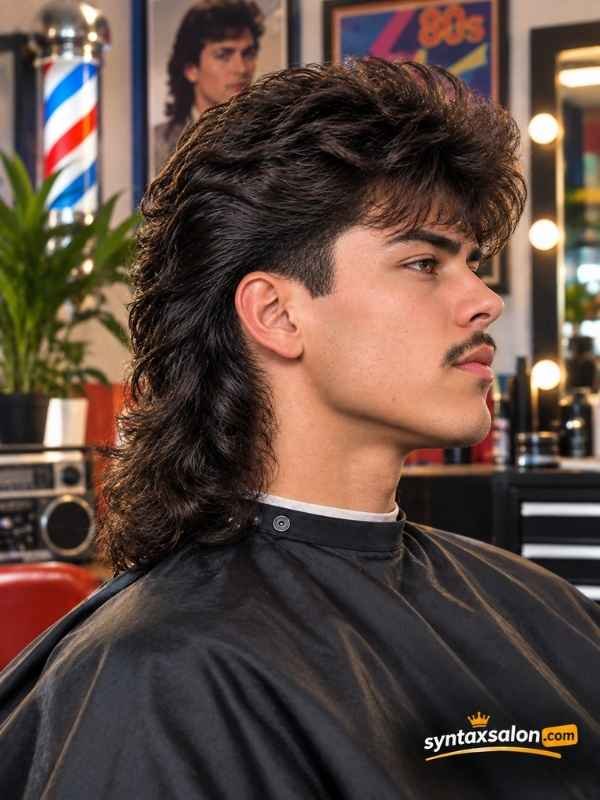
This is the boldest option on the whole list. Big volume on top, minimal fading, and a long, full back section that doesn’t get faded or tapered down. It’s more of a statement cut than an everyday one, and it needs the most daily product and attention to hold its shape properly.
V-Back Mexican Mullet
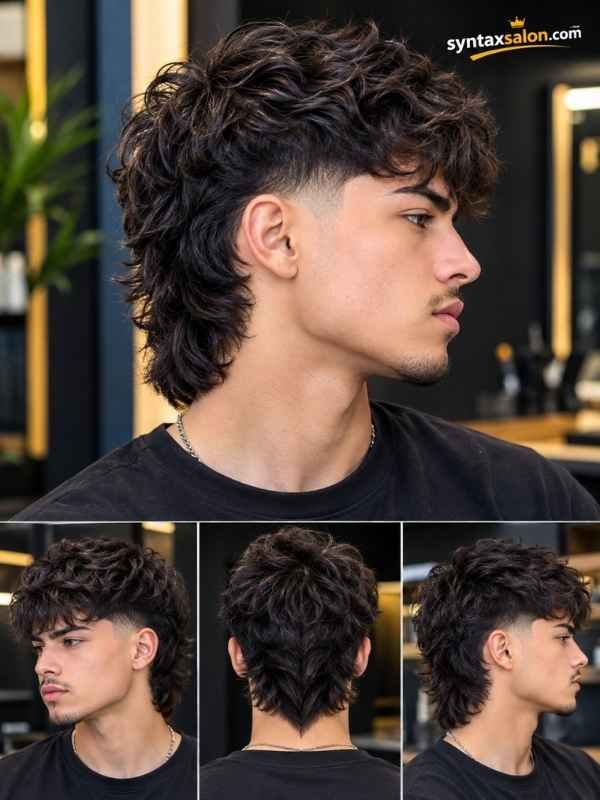
Instead of a rounded or straight-across back line, the V-back cuts to a sharp point at the nape. It gives the whole haircut a deliberate, geometric finish and pairs especially well with a burst fade or taper on the sides. Straight or lightly wavy hair holds this shape best — curls tend to soften that sharp point over time.
Choosing the Right Mexican Mullet for Your Face Shape
Oval Face
An oval face shape is considered one of the most versatile for hairstyles, which makes it a strong match for nearly every Mexican mullet variation. The naturally balanced proportions let both subtle and bold versions enhance your features without overwhelming your face.
Round Face
Guys with round face shapes usually do best with styles that add height and volume on top. That extra elevation creates the illusion of a longer face, which helps balance out rounder features.
Square Face
A Mexican mullet with textured layers works well for square face shapes, since it softens a prominent jawline and angular features. The added movement and texture create balance while keeping the strong, defined look square faces are known for.
Diamond Face
Diamond face shapes typically have wider cheekbones with a narrower forehead and chin. A medium-length Mexican mullet with tapered sides helps balance things out by adding width where it’s needed while keeping the overall shape proportional.
Best Hair Types for a Mexican Mullet
Straight hair shows off sharp lines and clean transitions exceptionally well, which is why fade-heavy styles like the burst fade or V-back tend to look their sharpest on straight strands. Wavy hair naturally adds movement and volume, making the cut look more dynamic without much effort. Curly hair brings extra texture and personality to the table, while thick hair helps the longer back section keep its fullness instead of going flat.
What to Tell Your Barber
Walking in with the right words saves you a bad haircut and an awkward conversation. Here’s what to cover before the clippers come out:
- Name your base style first. Decide between a taper, burst fade, or fully textured look before you sit down — it changes how much length the barber leaves on top.
- Give real length targets. A common starting point is around 2.5 inches on top and 4 to 5 inches in the back, adjusted for how your hair type holds length.
- Specify the fade. “Burst fade” and “taper fade” are different techniques with different results, so ask for one specifically rather than just saying “faded sides.”
- Talk texture. Tell your barber whether you want a smooth top or a choppier, textured finish — this is easy to assume wrong if you don’t say it out loud.
- Confirm the back shape. Rounded, straight-across, or V-shaped — this detail gets overlooked constantly and completely changes the finished look.
- Bring a photo. Even with the right vocabulary, a reference photo closes the gap between what you’re picturing and what your barber pictures.
How to Style a Mexican Mullet Haircut
Start with clean, slightly damp hair — bone dry or soaking wet both make products harder to work with. A lightweight texture spray or styling cream helps define your layers without stiffening them up. Blow-drying the top adds volume, while finger-styling brings out your natural texture instead of flattening it.
For a more polished finish, a matte pomade creates separation and definition without shine. If you’ve got curly or wavy hair, a curl-defining cream can cut down on frizz while keeping that natural movement intact. Either way, less product applied carefully beats a handful rubbed in all at once.
Maintenance Tips for Long-Lasting Results
Regular trims every three to four weeks keep the fade sharp and the overall shape intact — this is especially true for burst fades, which grow out faster than a standard taper. The longer back section needs less frequent attention, but it should still get cleaned up roughly every eight to ten weeks to avoid split ends and a shapeless, overgrown look.
Good shampoo and conditioner matter more here than people expect, especially if you’re using styling product daily. Buildup from pomade or clay can weigh hair down and make even a fresh cut look tired. As the cut grows out, expect the back to need occasional reshaping to keep the point or curve of your chosen back style — left alone, it’ll gradually lose its defined edge.
Common Mexican Mullet Mistakes to Avoid
Even a great cut can go wrong with the wrong follow-through. Watch for these:
- Skipping fade touch-ups. Letting a burst fade grow out for six-plus weeks turns a sharp look into a shaggy, unintentional one.
- Over-applying product. Piling on pomade or clay weighs the top down and kills the volume that makes the style work.
- Ignoring your hair type. Asking for a crisp Edgar fringe with tightly curled hair, for example, usually means fighting your natural texture daily instead of working with it.
- Not communicating the back shape. Assuming your barber knows you want a V-back instead of a rounded one is a common — and avoidable — miscommunication.
- Neglecting the back length entirely. Focusing all your attention on the fade while letting the back go unchecked leads to split ends and a lopsided, unbalanced shape over time.
Why Barbers Recommend the Mexican Mullet
Plenty of barbers genuinely like cutting this style because of how adaptable it is. The haircut allows for real customization while still giving clients a distinctive look tied to a current trend. Its ability to blend classic mullet structure with modern fading and texture techniques makes it one of the more versatile cuts in the chair right now.
Frequently Asked Questions
What is a Mexican mullet haircut?
A Mexican mullet haircut features shorter hair on the top and sides with longer hair left in the back, usually finished with a fade, textured layers, or an Edgar-style fringe.
What’s the difference between a Mexican mullet and a regular mullet?
A classic mullet is typically uniform and scissor-cut with minimal fading, while a Mexican mullet adds modern fades, sharper transitions, and deliberate texture on top.
How often should you get a Mexican mullet trimmed?
Plan on sides every three to four weeks to maintain the fade, with the back trimmed roughly every eight to ten weeks to keep its shape and prevent split ends.
Does a Mexican mullet work for curly or wavy hair?
Yes — curly and wavy hair both work well, and many barbers actually recommend leaning into the natural texture rather than trying to force it straight.
How much does a Mexican mullet haircut cost?
Pricing varies by barbershop and region, but expect it to fall in line with a standard fade haircut, sometimes slightly more if the style includes detailed fringe work or an intricate back shape.
Can a boy get a Mexican mullet haircut?
Yes, many barbers offer scaled-down, lower-maintenance versions — like a simple taper or low taper — that work well for younger clients without the upkeep that bolder variations require.
Conclusion
The Mexican mullet haircut isn’t really one style — it’s a flexible family of cuts built around the same core idea: short and sharp up front, long and full in back. Whether you’re drawn to a clean taper, a bold 80s-inspired version, or a curly, textured take that works with your natural hair, there’s a variation built for your face shape, hair type, and comfort level.
Walk into your next appointment with a specific style in mind and the talking points from this guide, and you’ll walk out with the cut you actually pictured. Start conservative with a taper or low taper if you’re not sure, keep up with trims on schedule, and you can always go bolder once you’re used to maintaining the length in the back.