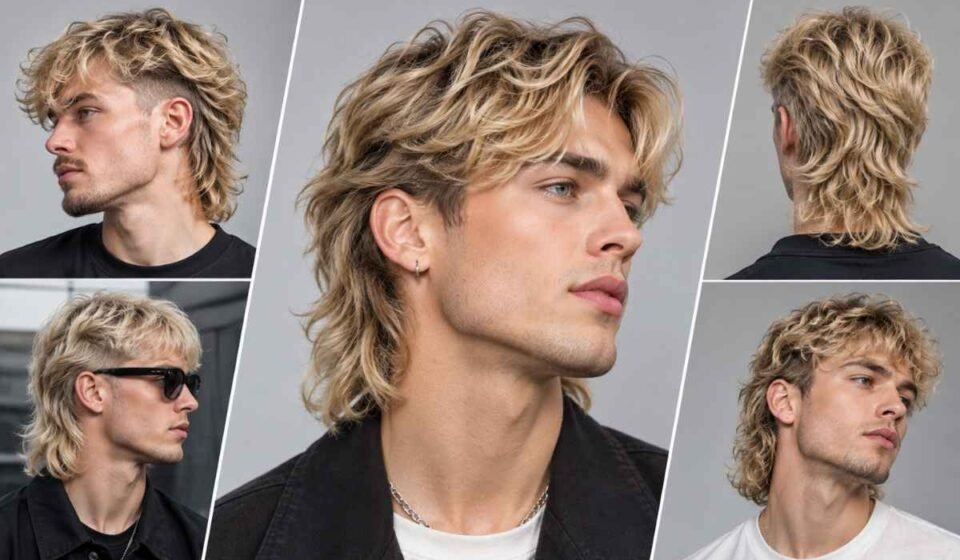

Quick Answer: A blonde modern mullet is an updated take on the classic mullet — shorter, softly graduated sides blending into a longer, textured back — finished in a blonde tone ranging from platinum to dirty blonde. Unlike the harsh 1980s version, the modern cut uses fades, tapers and internal layering to keep the silhouette wearable, while the lighter colour emphasises texture and movement through the top and tail.
The mullet came back, and this time it stayed. What separates the 2026 version from its predecessor is restraint: the disconnection is softer, the tail is shaped rather than simply grown out, and blonde colouring is used as a structural tool instead of a shock tactic. Below are 39 distinct variations, followed by a selection guide that tells you which ones actually suit your face shape and hair type, exactly what to ask your stylist for, and how to keep bleached hair in good condition long-term.
What Makes This Hairstyle So Popular Today?
Three things pushed the modern mullet from niche to mainstream. First, barbering technique improved — fade and taper work that was once reserved for short cuts is now applied to the sides of a mullet, which removes the abrupt “helmet” line that made the old version look dated. The transition became a gradient rather than a cliff.
Second, blonde changed the way the cut reads. A single-tone dark mullet shows shape only in silhouette; blonde shows shape in every dimension, because lighter hair reflects more light and makes layers, choppy ends and texture visible from the front and side. Colourists began treating the tail and the crown as separate zones, lifting one more than the other to build depth.
Third, it fits how people actually wear their hair now. The cut grows out gracefully, tolerates air-drying, and works across hair types — straight, wavy, curly and coily all have viable versions. For anyone with fine hair, the layered back creates the impression of density; for anyone with thick hair, internal removal keeps weight under control. It’s also one of the few statement cuts that can be dialled down to office-appropriate with nothing more than a lower fade and a neutral tone.
Social platforms accelerated all of this, but the staying power comes from adaptability. Below, each variation is a different answer to the same question: how much contrast, how much length, and how much brightness do you actually want?
39 Blonde Modern Mullet Variations
Platinum Sharp Blend Mullet
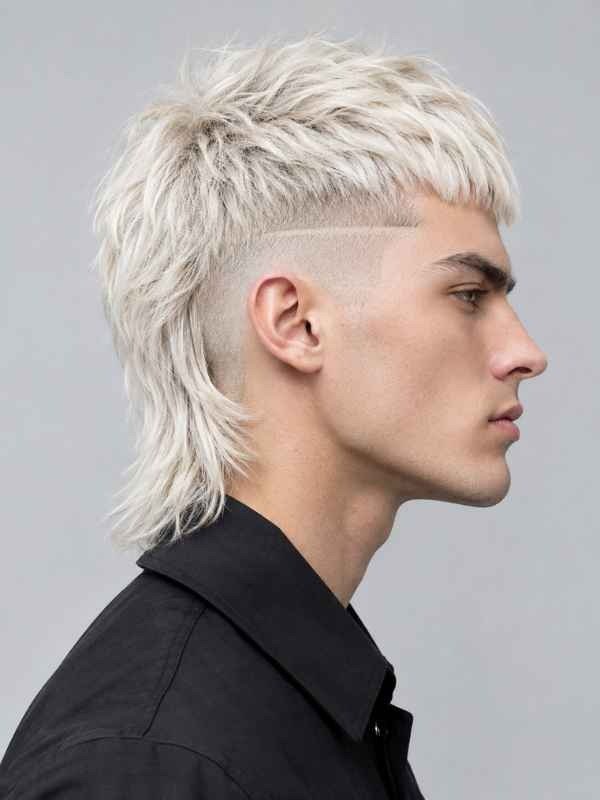
Maximum lift meets maximum precision here. The hair is taken to a near-white platinum, then cut with clean, deliberate lines through the sides so the pale tone never looks accidental. Because platinum removes almost all natural pigment, the cut’s geometry becomes the main visual event — every disconnection and every graduated edge is on display. Expect a serious commitment: root regrowth is obvious within three to four weeks, and purple toning shampoo becomes a permanent fixture in your routine.
Best for: oval and square face shapes; medium to thick hair in good condition.
Ash Tone Precision Mullet
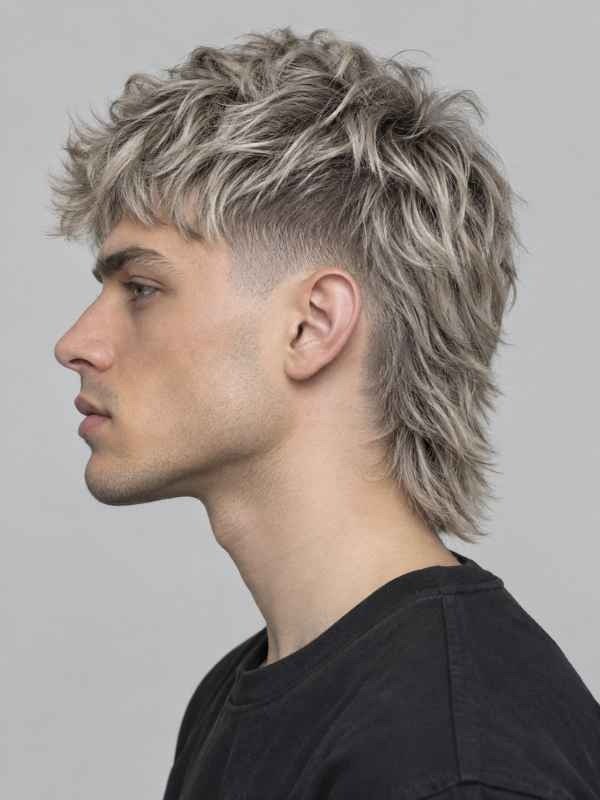
Where platinum shouts, ash speaks quietly. This variation pulls the blonde toward a cool, greyish cast that suppresses warmth and gives the cut a muted, almost matte appearance. It reads as expensive rather than loud, which makes it one of the more office-friendly options on this list. The precision element comes from a tight, controlled perimeter — the tail is trimmed to a clean line rather than left choppy, and the sides are kept close.
Honey Smooth Transition Mullet
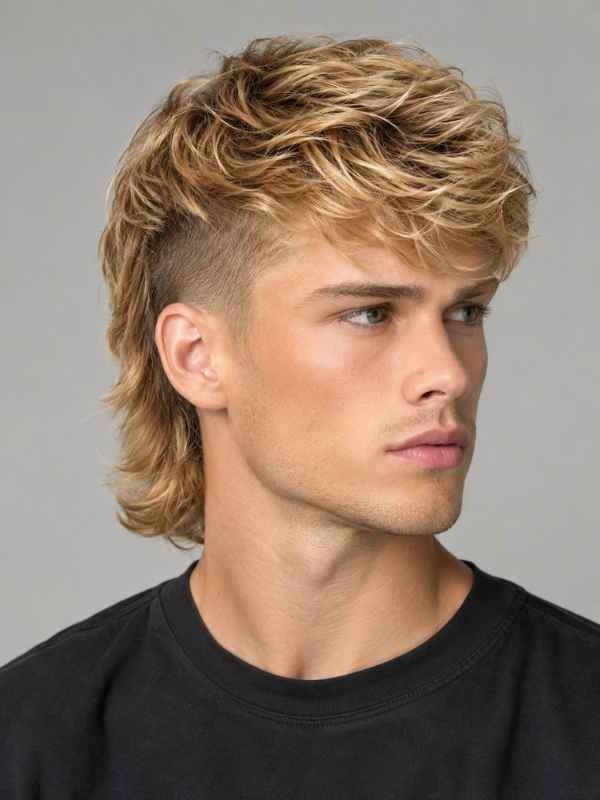
Warmth is the whole point. Honey blonde keeps golden pigment in play, so the colour flatters warmer skin tones and requires far less aggressive lifting than platinum. “Smooth transition” describes the cut: there’s no visible step between the short sides and the longer back, just a continuous slope. Damage risk drops considerably at this lift level, which makes it a sensible entry point for a first-time blonde.
Best for: warm skin tones; fine to medium hair that can’t take heavy bleaching.
Beige Clean Structure Mullet
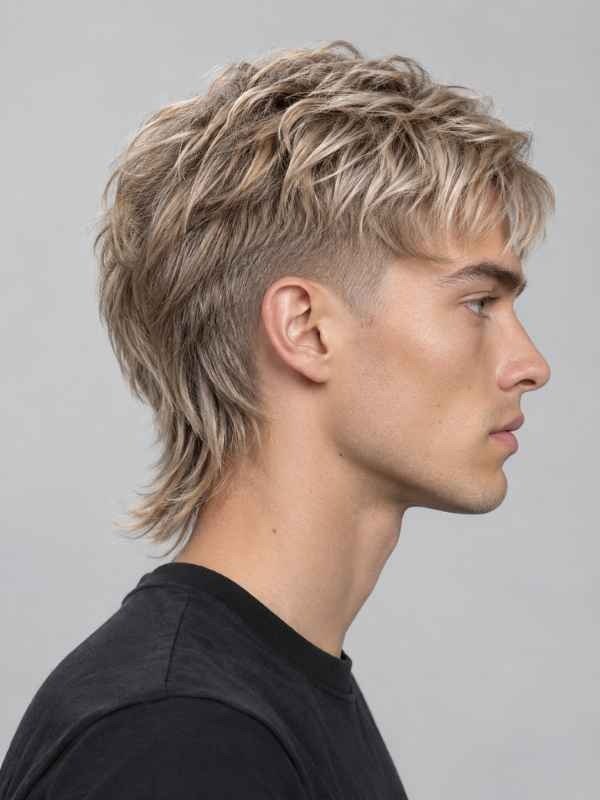
Beige blonde sits between warm and cool — neutral enough to avoid brassiness, soft enough to avoid the starkness of ash. Pair that with a structured cut and you get a look that photographs well without drawing stares. The sides are kept deliberately tidy, the top holds a defined shape, and the tail is shaped into a narrow taper. Low-drama colour, high-drama silhouette.
Low Fade Soft Blonde Mullet
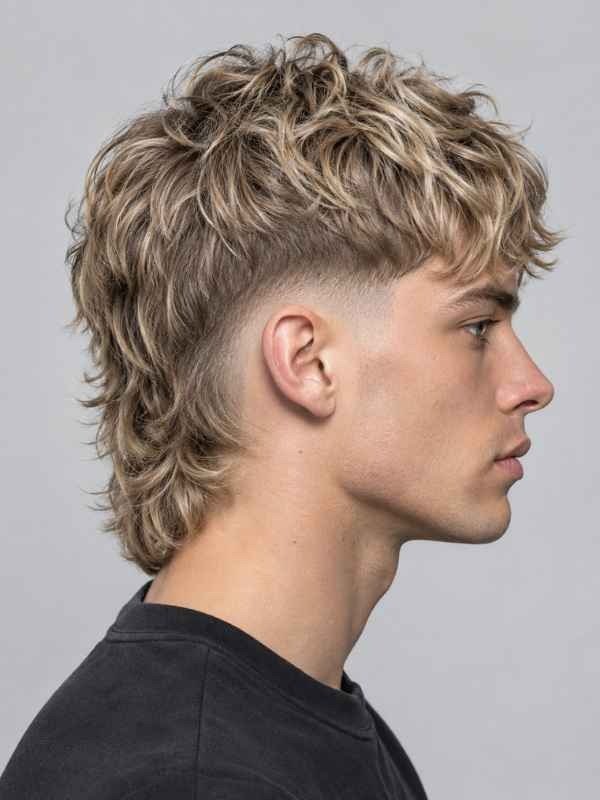
Start the fade near the ear and you keep the sides looking dense rather than shaved. That’s the logic of the low fade: it introduces barbering polish without the aggressive contrast of a high fade, so the overall shape stays soft. The blonde is kept gentle here too — usually a mid-depth tone rather than a bleach-out. Ask for a low fade that begins just above the ear and blends into scissor-cut length by the parietal ridge.
Best for: round and heart-shaped faces; anyone wanting a mullet that won’t raise eyebrows at work.
Taper Blend Modern Mullet
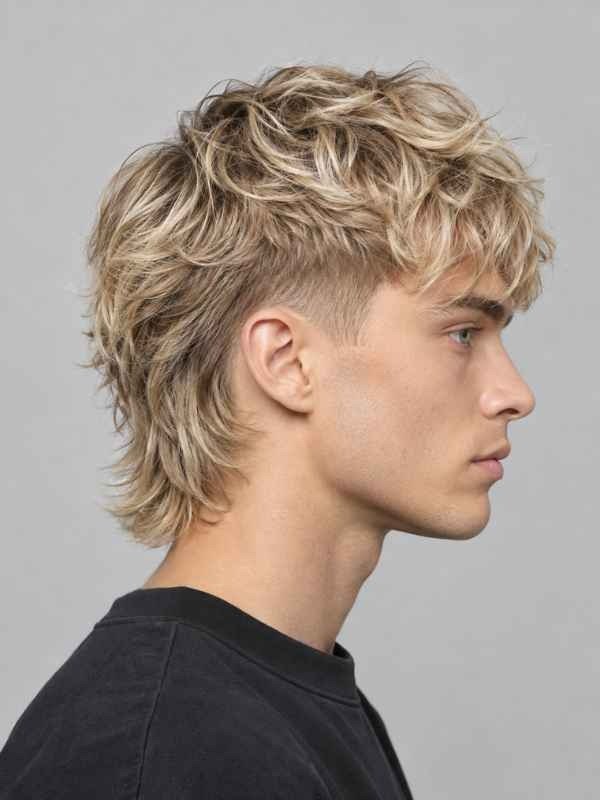
A taper differs from a fade in an important way: it shortens the hair gradually without ever going down to skin. That keeps this version the most conservative of the graduated options. Blonde tones through the mid-lengths highlight the gradual reduction in weight, and the back retains enough length to be unmistakably a mullet. If you’re testing whether the cut suits you before committing, this is the low-risk trial run.
Balanced Neutral Blonde Mullet
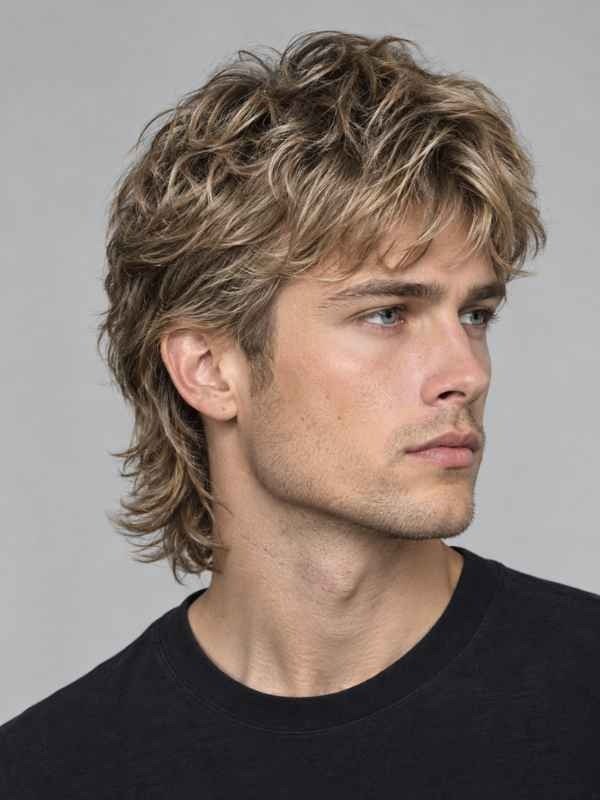
Nothing here is pushed to an extreme. Length is moderate, contrast is moderate, and the blonde sits in the middle of the tonal range — neither icy nor golden. The appeal is exactly that balance: it suits a wide range of face shapes and doesn’t demand a specific hair texture to work. Consider it the default setting, the version to choose when you want the shape without making a statement about it.
Soft Edge Professional Mullet
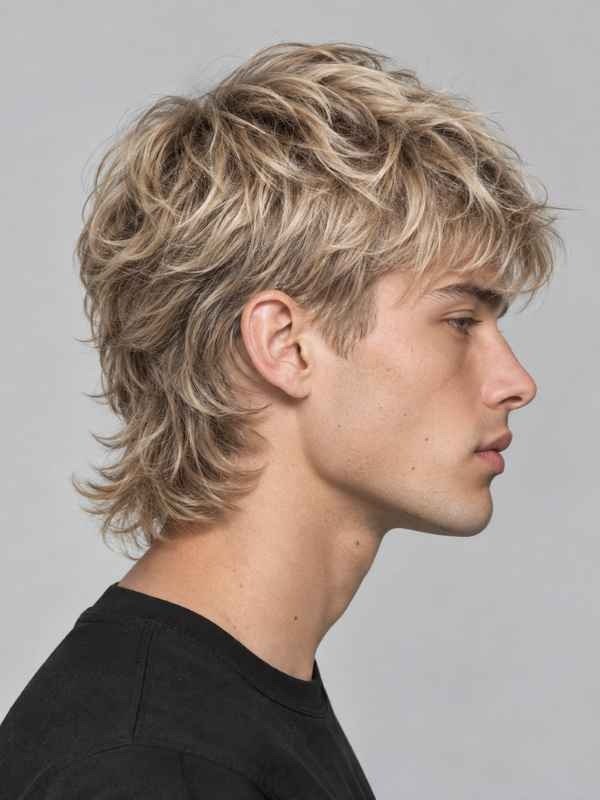
Every hard line in this cut has been deliberately softened. Point-cutting removes the blunt perimeter, the sides blend rather than disconnect, and the tail ends in a feathered taper instead of a defined edge. Combined with a subdued blonde, the result passes in conservative environments while still being recognisably modern. Styling takes under a minute — a light cream and air-drying is usually enough.
Best for: workplaces with dress codes; straight to slightly wavy hair.
Layer Control Mullet
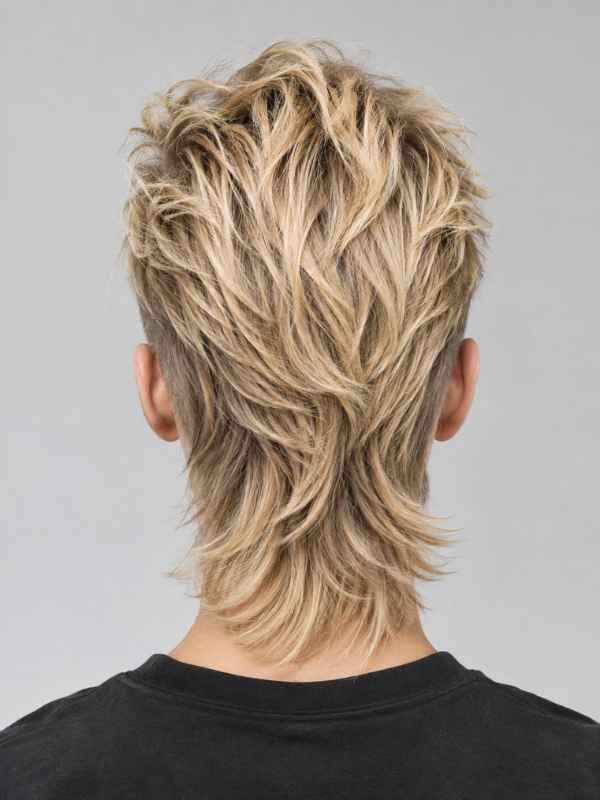
Thick hair has an unfortunate habit of turning a mullet into a triangle. This variation solves that with internal layering — weight removed from inside the cut rather than off the outline — so the silhouette stays narrow through the sides while the back keeps its length. Blonde helps by visually separating the layers, meaning the work your stylist does is actually visible rather than buried in a dense mass.
Best for: thick, coarse hair; anyone whose previous mullet grew outward instead of downward.
Classic Clean Blonde Mullet
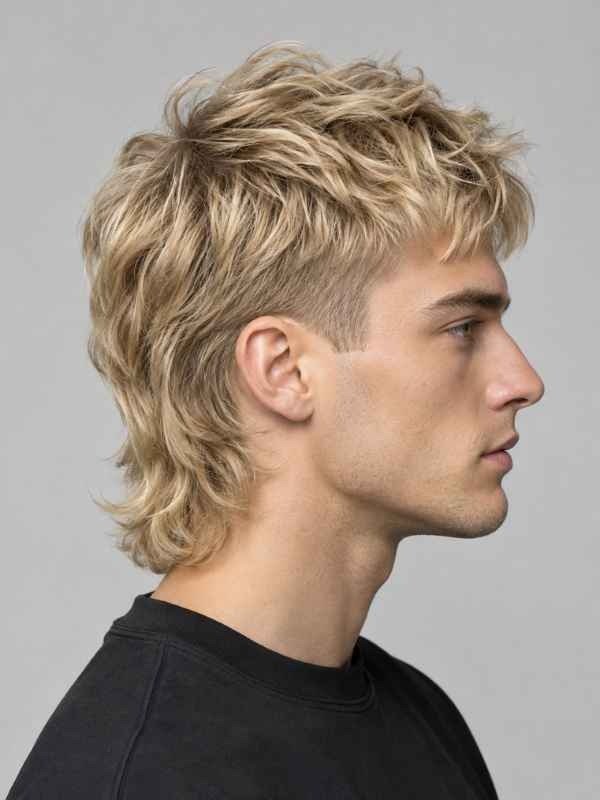
Strip away the trend elements and you get this: short sides, longer back, clean edges, blonde colour. There’s no fade gimmick, no choppy texturing, no disconnection. It’s the reference version everything else on this list deviates from, and it holds up precisely because it doesn’t chase anything. Maintenance is straightforward — a trim every four to six weeks preserves the outline.
Tousled Texture Blonde Mullet
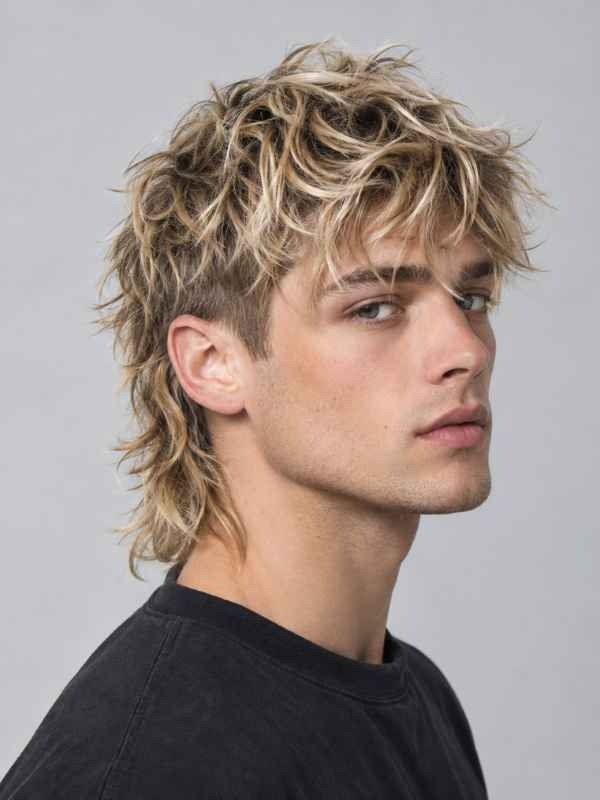
Deliberate messiness requires more technique than it appears to. The ends are heavily texturised so the hair falls in irregular pieces rather than a uniform curtain, and blonde makes each of those pieces distinguishable. Applied to damp hair, a sea-salt spray followed by rough drying gets you there in a couple of minutes. The trade-off: it looks best slightly unwashed, which not everyone enjoys.
Layer Boost Volume Mullet
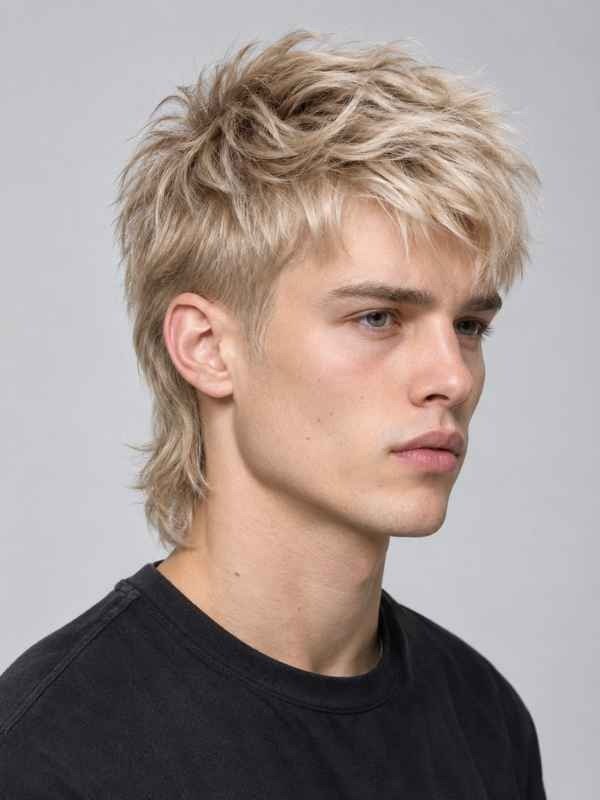
Fine hair benefits enormously from this one. Short, stacked layers through the crown lift the hair off the scalp and create height that flat cuts simply can’t produce. Lighter blonde enhances the illusion further, since pale strands scatter light and read as fuller. A root-lifting mousse applied at the base before blow-drying — directing airflow upward — locks in the volume for the day.
Best for: fine and thinning hair; oval and oblong face shapes.
Wind Flow Blonde Mullet
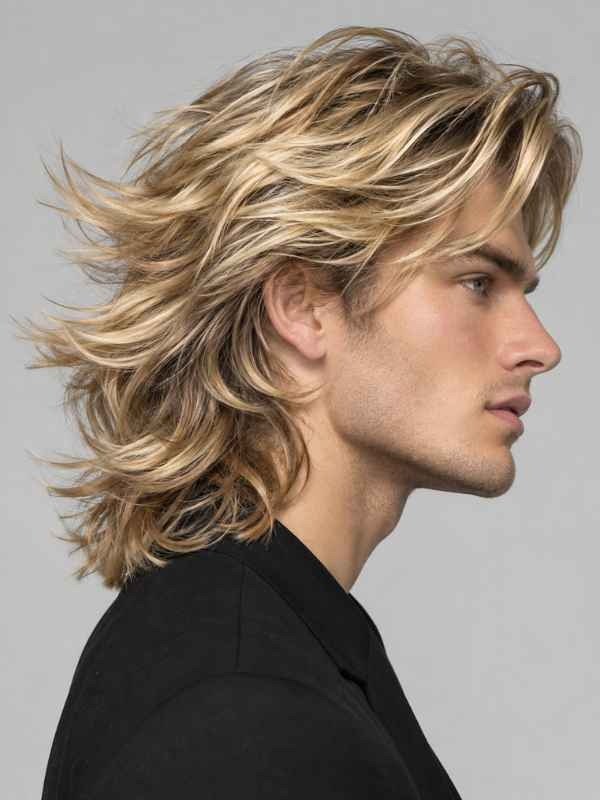
Long, sweeping layers give this version a permanent sense of motion, as though it has just been caught by a breeze. Nothing is anchored down: the top sweeps back, the sides move with it, and the tail follows. Blonde is essential to the effect, because the highlights running through the sweep are what make the movement visible. It suits straight and loosely wavy hair; tighter curls resist the directional flow.
Shag Inspired Blonde Mullet
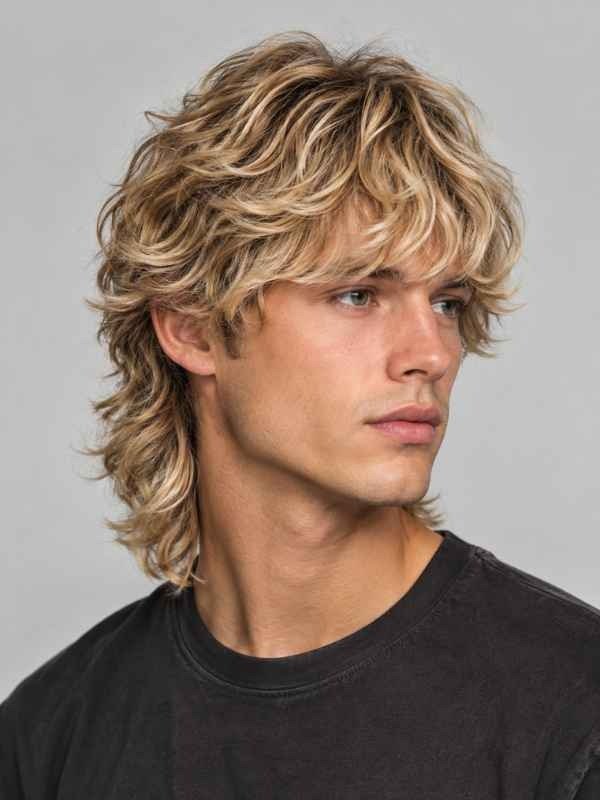
Borrowing from the 1970s shag, this variation adds heavy layering throughout — not just at the back — along with a soft fringe at the front. The mullet structure remains, but the whole shape becomes rounder and more lived-in. Blonde in a warm, sun-faded tone suits the retro reference better than anything icy. Curly and wavy hair takes to it naturally.
Natural Depth Dirty Blonde Mullet
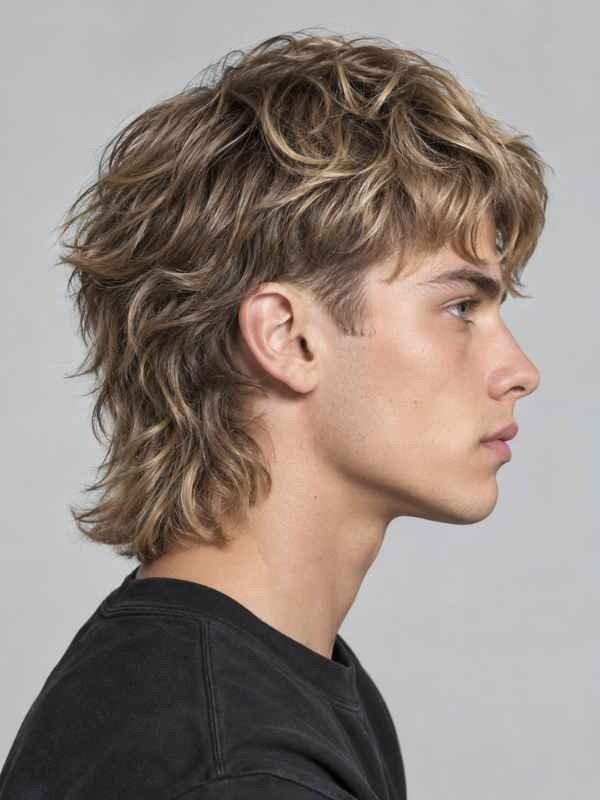
Not all blonde need to be bright. Dirty blonde keeps significant natural depth, sitting somewhere between light brown and blonde, which delivers two practical advantages: minimal damage from processing, and regrowth that blends instead of announcing itself. Dimension comes from subtle variation between the roots and the mid-lengths rather than from high contrast. If you want blonde without a maintenance schedule, start here.
Best for: anyone with damaged or previously coloured hair; low-commitment colour seekers.
Feather Finish Blonde Mullet
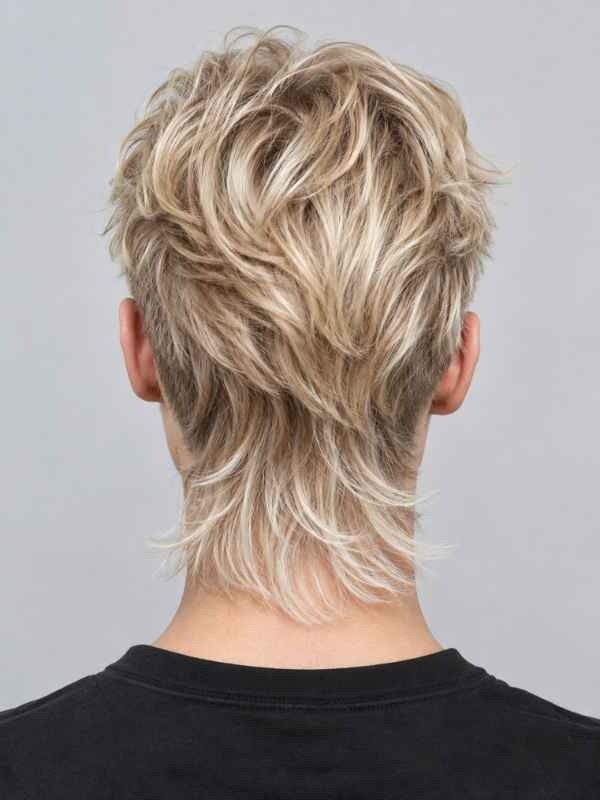
The defining detail is at the very ends, where the hair is cut to taper into fine, wispy points. This eliminates any blunt weight at the perimeter and lets the tail move freely. Lighter blonde at those feathered tips makes them almost translucent against the neck. Regular trims matter more than usual — feathered ends lose their shape quickly once split ends develop.
Dense Texture Statement Mullet
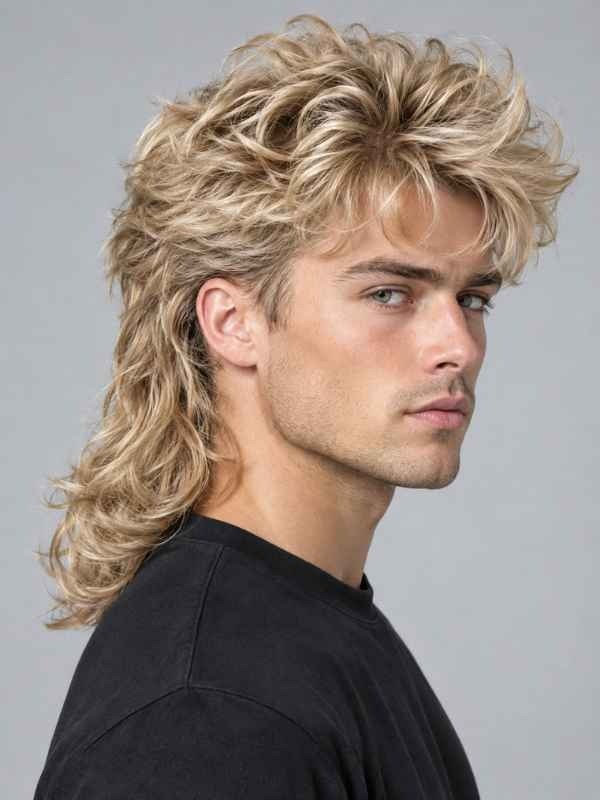
Instead of thinning out thick hair, this version leans into it. Volume is preserved throughout, the tail is left full rather than tapered, and texturising creates separation without removing bulk. Blonde on dense hair produces a striking effect — a large mass of light, visibly textured hair that dominates the silhouette. It is a statement, as the name suggests, and it is not subtle.
Razor Edge Blonde Mullet
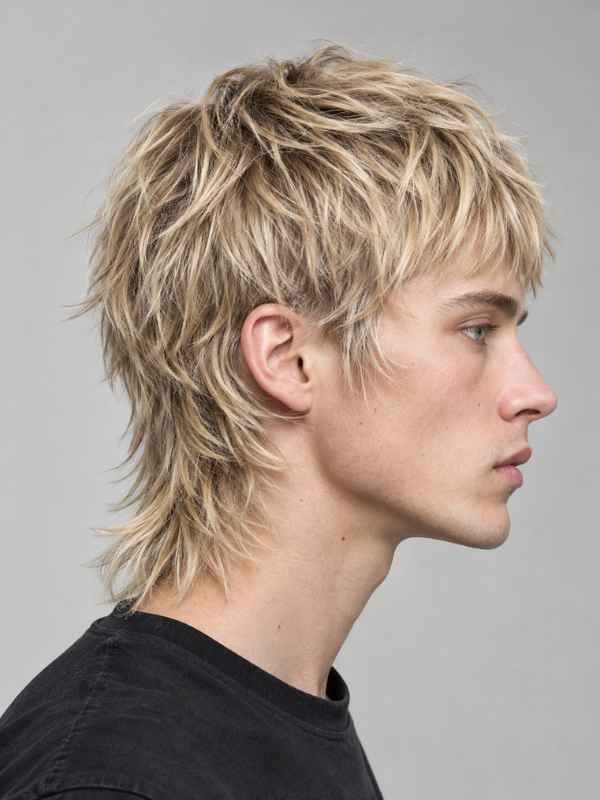
A straight razor produces a fundamentally different edge than scissors: softer, more irregular, with a slightly shredded finish that scissors can’t replicate. Applied through the sides and the tail perimeter, it gives the cut a raw, undone quality. One caveat worth knowing — razor cutting on already-bleached hair can encourage breakage, so this pairs best with a gentler blonde tone rather than full platinum.
Wolf Hybrid Blonde Mullet
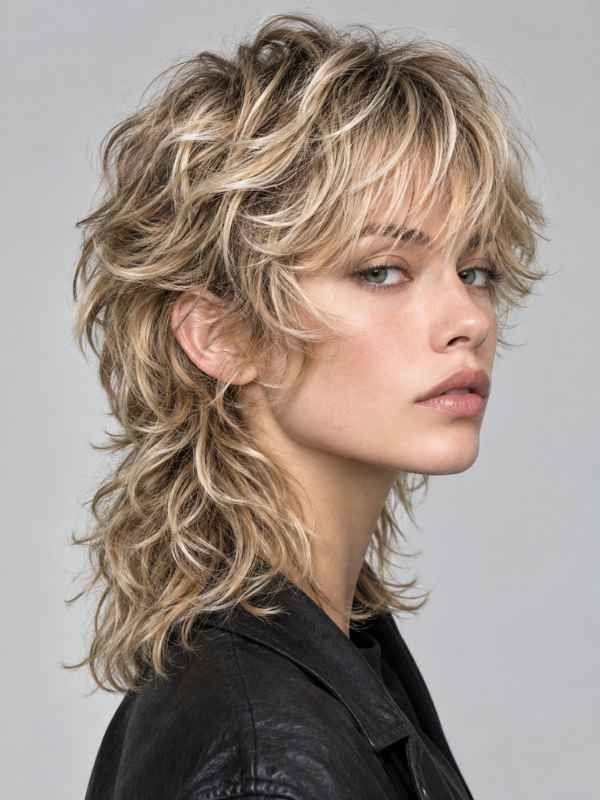
Cross a mullet with a shag and you get the wolf cut: heavy layering up top, wispy fringe, and a longer back that keeps the mullet identity. It’s one of the most texture-forward options available and works exceptionally well on wavy hair. Blonde emphasises the layer stack, particularly around the crown where the shortest pieces sit. Expect it to need product — a texturising spray is non-optional.
Best for: wavy and curly hair; oval, square and diamond face shapes.
Free Flow Natural Blonde Mullet

Structure is kept intentionally loose here. The cut follows the hair’s own growth pattern rather than imposing a shape on it, the layers are long and unfussy, and the blonde is applied in a soft, undefined way. There’s no styling routine to speak of — wash, air-dry, done. It’s the variation for people who want the shape but refuse to maintain it daily.
Compact Short Blonde Mullet
For anyone who finds the traditional tail excessive, this trims the back to a modest length — long enough to register as a mullet, short enough to sit above the collar. The sides stay tight, the top keeps some texture, and the overall footprint is small. It also grows out more forgivingly than longer versions, since there’s less length to fall out of shape.
Best for: first-time mullet wearers; anyone in a semi-formal environment.
Balanced Medium Blonde Mullet
Sitting between the compact and extended versions, this keeps the back at roughly nape length — enough to move and show layering, not enough to require tying back. Most people find this the practical sweet spot. Blonde tones through the mid-lengths and ends give it dimension without needing a full head of bleach.
Extended Tail Blonde Mullet
Commitment defines this one. The tail is grown well past the nape, sometimes reaching the shoulder blades, creating dramatic contrast against the short sides. Blonde along that length turns it into the focal point of the entire look. Be realistic about upkeep: long bleached hair is fragile at the ends, so weekly deep conditioning and a bonding treatment become necessary rather than optional.
Curl Defined Blonde Mullet
Curls do a lot of the work in a mullet — they provide natural volume and separation without any texturising required. The cut here is dry-cut where possible so each curl is shaped according to how it actually falls. Blonde on curls highlights the spiral pattern beautifully, though it’s worth noting that bleached curls lose elasticity, so a curl-specific protein treatment should be in rotation.
Best for: loose to tight curl patterns; round and heart-shaped faces.
Wave Motion Blonde Mullet
Natural waves get enhanced rather than corrected. The layering follows the wave pattern so each bend is supported rather than fighting the cut, and the blonde catches on the peaks of those waves to create natural-looking dimension. Scrunching a light mousse into damp hair and diffusing on low heat is the whole routine.
Sleek Straight Blonde Mullet
This is the polished counterpoint to every textured version above. The hair is smoothed flat, the lines are kept sharp, and the blonde appears as a solid, glossy sheet rather than a collection of pieces. It demands straight hair or committed styling — a heat protectant and a flat iron are both required. The payoff is a modern, almost architectural silhouette.
Texture Perm Blonde Mullet
For naturally straight hair that won’t hold texture, a soft perm builds movement into the cut permanently. Modern perm formulas are considerably gentler than older ones, but combining a perm with bleach is genuinely demanding on the hair — most stylists will insist on spacing the two services several weeks apart. When it works, fine straight hair gains body it could never achieve with product alone.
Best for: fine, straight hair in healthy condition; those willing to schedule two separate services.
Contrast Disconnect Mullet
Rather than blending the sides into the top, this version leaves a deliberate, visible break between the two lengths. It’s the most graphic option on the list — the disconnection is the design. Blonde amplifies it further, particularly if the top is lifted lighter than the sides. Strong jawlines carry it best; softer face shapes may find the hard line unflattering.
Fringe Focus Blonde Mullet
Attention shifts to the front here. A substantial fringe — blunt, textured or softly swept — becomes the dominant feature, with the mullet structure supporting it from behind. Lighter blonde through the fringe draws the eye upward and can effectively shorten the appearance of a long face. Forehead and hairline considerations matter more with this one than with any other version.
Best for: oblong face shapes; high foreheads.
Center Curtain Blonde Mullet
Curtains part in the middle and frame the face on both sides, and pairing them with a mullet back creates a soft, symmetrical front with an unexpected rear silhouette. The blonde is usually brightest on the inner edges of the curtain, where the light naturally hits. Length through the front needs to reach at least the cheekbones for the parting to sit properly.
Bleached Impact Rebel Mullet
Everything about this is loud. Full-head bleach at maximum lift, aggressive texturising, exaggerated contrast between sides and tail — it’s designed to be looked at. Hair health takes the biggest hit of any variation on this list, so it should only be attempted on hair that hasn’t been chemically processed recently, and preferably in stages across multiple appointments rather than in a single session.
Root Contrast Blonde Mullet
Dark roots left deliberately unlifted, with blonde beginning somewhere around the mid-lengths. Practically, this is the smartest colour choice on the entire list: regrowth is part of the design, so you can stretch appointments to eight or ten weeks instead of three or four. Visually, the depth at the root also makes the blonde beneath appear brighter by comparison.
Best for: anyone with dark natural hair; low-maintenance colour budgets.
Frost Highlighted Tip Mullet
Only the very ends are lightened, frosted to a pale tone while the rest of the hair keeps its natural depth. Because the bleach touches so little of the hair, damage stays minimal and the effect is concentrated exactly where movement happens — the tips of the layers and the end of the tail. It’s a subtle way to get blonde into the cut without a full colour commitment.
Slick Finish Blonde Mullet
Pomade, a comb, and intent. The top and sides are slicked back into a smooth surface while the tail is left to fall naturally behind, producing a sharp contrast between controlled and loose. Blonde under a high-shine product takes on an almost metallic quality. Formal-adjacent and surprisingly versatile — it dresses up better than most mullets manage.
Gloss Effect Wet Blonde Mullet
Similar in spirit to the slick finish but wetter and less structured. A gel or high-shine serum is worked through damp hair and left to set, so the hair holds a permanently just-showered appearance. On blonde, the wet look intensifies the tone and makes it appear several shades richer. It suits shorter and medium lengths better — very long tails start to look weighed down.
Spiked Crown Blonde Mullet
Vertical height at the crown is the signature. The top is cut shorter and styled upward into separated spikes or a textured lift, while the back retains full mullet length. Blonde tips on those spikes exaggerate the height and make the separation obvious. A strong-hold clay or paste is essential; anything lighter collapses within an hour.
Undercut Contrast Blonde Mullet
The sides are taken very short — often clipper-length — with the top and back left substantially longer, producing the most extreme length differential available. It’s a cousin of the contrast disconnect, but the undercut version removes more hair from the sides, which makes the remaining shape read as narrower. Useful for thick hair that needs genuine bulk removal.
Best for: thick, dense hair; round faces needing a narrowing effect.
Minimal Modern Blonde Mullet
Everything reduced to its quietest form: barely-there disconnection, a short tail, and blonde so understated it might read as natural lightening. Someone unfamiliar with the cut may not immediately identify it as a mullet at all. That’s the point — it’s for people who like the shape but have no interest in explaining it.
Best for: conservative workplaces; anyone easing into the style.
Curved Drop Shape Mullet
The perimeter follows a rounded, curving line from the sides down through the tail rather than dropping straight. That curve softens the whole silhouette and removes any harsh angles, making it notably flattering on angular or square face shapes. Blonde along the curved edge traces the shape and makes the stylist’s line work visible. It’s the most technically demanding cut here — the curve has to be accurate or the whole shape collapses.
Best for: square and angular face shapes; anyone who finds hard lines unflattering.
Blonde Modern Mullet for Men vs. Women
The cut is fundamentally the same, but the emphasis differs. Men’s versions typically prioritise barbering technique — fades, tapers and tight perimeters — while women’s versions more often prioritise layering and length through the front. Neither rule is binding, and plenty of the best results ignore the distinction entirely.
Blonde Modern Mullet Styles for Men
Men’s blonde mullets usually start with the sides. A fade or taper does most of the shaping work, and the length differential between sides and back does the rest. The most reliable combinations from the list above are the Low Fade Soft Blonde Mullet and the Taper Blend Modern Mullet for anyone wanting a wearable version, and the Undercut Contrast or Contrast Disconnect for anyone wanting the shape to be unmistakable.
Beard interaction matters more than most guides mention. A blonde mullet over a dark beard creates a strong horizontal break across the face — some people want that contrast, others find it disjointed. If your facial hair is significantly darker than your target blonde, ask your stylist to keep the tone warmer rather than icy, which narrows the gap.
Tail length is the other decision point. Anything past the collar reads as committed; anything at or above the nape stays casual. Men working in conservative environments generally do better with the Compact Short or Minimal Modern versions, paired with a low fade rather than a high one.
For colour, men who haven’t coloured before should avoid going straight to platinum. Root Contrast, Frost Highlighted Tip and Natural Depth Dirty Blonde all deliver visible blonde with a fraction of the processing and a far more forgiving regrowth pattern.
Blonde Modern Mullet Styles for Women
Women’s blonde mullets tend to lean into the softer, more layered end of the spectrum. The Wolf Hybrid, Shag Inspired and Curl Defined variations are among the most requested, largely because they combine face-framing layers at the front with the mullet’s length at the back — a combination that flatters a wide range of face shapes without requiring short sides.
Length gives more options. Where men’s versions often stop at the nape, women frequently keep the tail at shoulder length or beyond, which makes the Extended Tail variation considerably more common. That length changes the maintenance equation: bleached hair past the shoulders is older hair, and it needs bond-building treatments to survive repeated toning.
Fringe choice is the biggest lever. Curtain bangs (Center Curtain) soften round and square faces; a blunt or textured fringe (Fringe Focus) shortens an oblong face. Both let you keep significant length elsewhere while changing how the whole cut reads.
For colour placement, balayage and root-shadow techniques suit women’s longer versions better than a full-head lift. Lightening concentrated through the mid-lengths and ends means the tail — the part that moves and catches light — carries the brightness, while the roots stay low-maintenance.
Blonde Modern Mullet Fade Guide
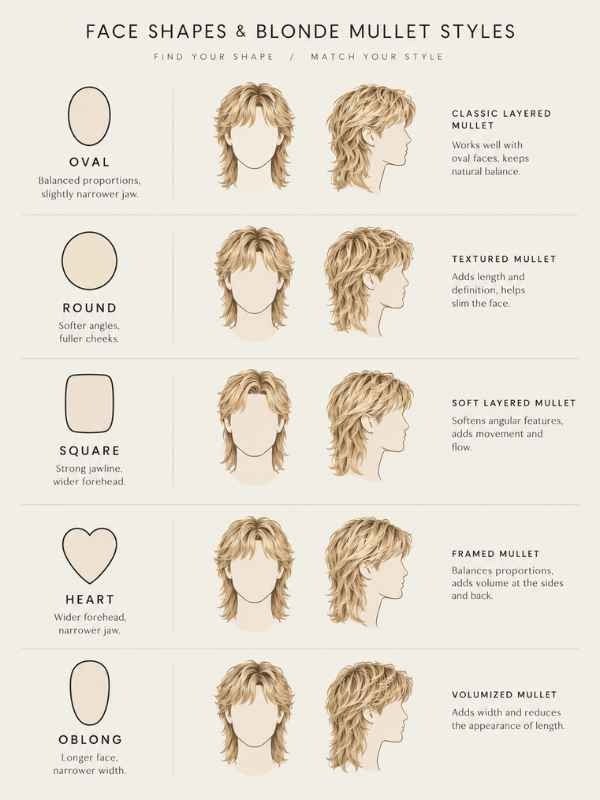
The fade is where most blonde mullets succeed or fail. Get the height wrong and the cut either looks unfinished or unbalanced, and because blonde makes every transition more visible, mistakes are harder to hide than on darker hair.
Choosing the Right Fade Height
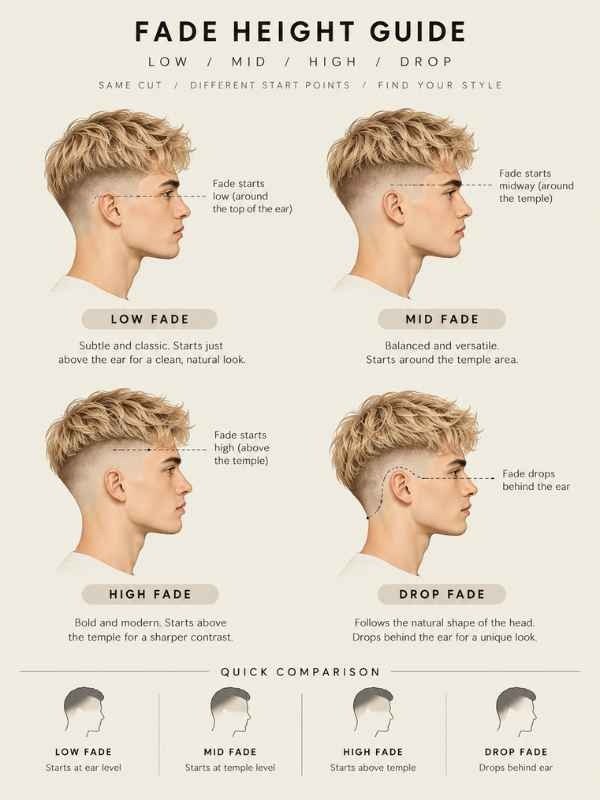
Low fade starts just above the ear and stays close to the natural hairline. It leaves the most hair on the sides, which keeps the silhouette soft and the contrast gentle. Choose it if your face is round or heart-shaped, if your workplace is conservative, or if this is your first mullet. It’s the most forgiving option as it grows out.
Mid fade begins around the temple, roughly level with the top of the ear. It sits between subtlety and statement and suits the widest range of face shapes — if you’re unsure, this is the safe default. It also creates enough contrast to make a blonde tail read as intentional rather than accidental.
High fade starts at or above the temple and takes the sides very short very quickly. The result is maximum contrast and a strongly vertical silhouette, which flatters round faces by adding perceived height but can make long or narrow faces look longer still. High fades need re-cutting every two to three weeks to stay sharp.
Drop fade curves downward behind the ear, following the head’s natural shape instead of running in a straight line. It pairs particularly well with the mullet because the downward curve flows into the tail rather than cutting across it. If you like the Curved Drop Shape variation, this is its natural fade partner.
One colour-specific note: if the sides are bleached along with the rest, fading through lightened hair exposes the scalp more visibly, because pale hair doesn’t provide the same shadow contrast that darker hair does. Many stylists deliberately keep the fade area slightly deeper in tone than the top and tail for exactly this reason.
What to Tell Your Barber for a Blonde Mullet Fade
Vague instructions produce vague results. Use concrete terminology:
- Name the fade height and starting point. “A mid fade starting at the temple” is unambiguous; “faded sides” is not.
- Specify the guard number if you know it. A #1 leaves roughly 3mm, a #2 around 6mm, a #3 around 10mm. If you don’t know, ask where they plan to start and what it will look like in three weeks.
- Describe the blend point. Say where you want the clipper work to hand over to scissor work — usually at the parietal ridge, the point where the side of the head curves into the top.
- State the tail length in measurable terms. “Two inches past the collar” or “just touching the nape” beats “longish at the back.”
- Ask for the disconnection level explicitly. Blended, softly disconnected, or hard disconnected — these produce visibly different cuts.
- Mention the colour plan before cutting starts. If you’re lightening the sides, the barber may fade slightly less aggressively to compensate for reduced contrast.
- Bring two photos, not one. One from the side showing the fade, one from the back showing the tail shape. Front-facing photos rarely communicate a mullet accurately.
Smart Selection Guide for the Right Look
Choosing from 39 near-identical names is genuinely difficult, so work backwards: start with your face shape, filter by hair type, then narrow by how much maintenance you’re willing to take on.
Face Shape and Hair Type Matching Table
| Face shape | Hair type | Best-fit variations | Fade height | Avoid |
| Oval | Fine | Layer Boost Volume, Texture Perm, Frost Highlighted Tip | Low or mid | Dense Texture Statement |
| Oval | Medium | Platinum Sharp Blend, Balanced Medium, Wind Flow | Any | — |
| Oval | Thick/curly | Layer Control, Wolf Hybrid, Curl Defined | Mid or high | Sleek Straight |
| Round | Fine | Spiked Crown, Layer Boost Volume | High or mid | Curved Drop Shape |
| Round | Medium | Low Fade Soft Blonde, Undercut Contrast | High | Fringe Focus (blunt) |
| Round | Thick/curly | Undercut Contrast, Curl Defined, Layer Control | High | Dense Texture Statement |
| Square | Fine | Soft Edge Professional, Feather Finish | Low | Contrast Disconnect |
| Square | Medium | Curved Drop Shape, Shag Inspired, Center Curtain | Low or mid | Razor Edge |
| Square | Thick/curly | Curved Drop Shape, Wolf Hybrid, Wave Motion | Mid | Sleek Straight |
| Heart | Fine | Center Curtain, Honey Smooth Transition | Low | Spiked Crown |
| Heart | Medium | Curl Defined, Balanced Neutral, Shag Inspired | Low or mid | High-contrast disconnects |
| Oblong | Any | Fringe Focus, Wave Motion, Compact Short | Low | Extended Tail, high fades |
| Diamond | Medium/thick | Wolf Hybrid, Tousled Texture, Free Flow Natural | Mid | Slick Finish |
Going short? If you want a shorter blonde mullet specifically, the Compact Short Blonde Mullet is the anchor variation — pair it with a low or mid fade and a neutral tone (Beige Clean Structure or Balanced Neutral) to keep the proportions tidy. The Minimal Modern version is the even shorter, quieter alternative. Short mullets suit oblong faces particularly well, since they avoid adding vertical length, and they’re the most practical choice for anyone who needs the option of looking conventional at short notice.
Filtering by Maintenance Level
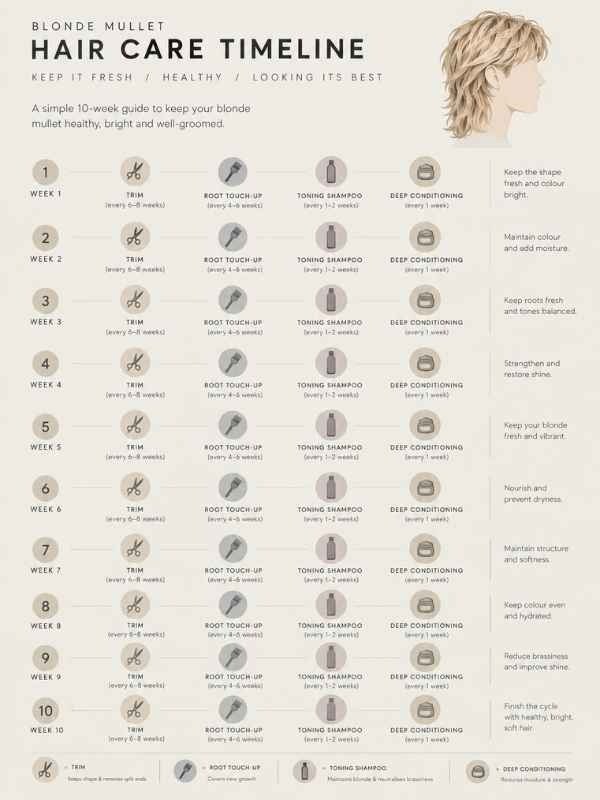
- Lowest upkeep (8–10 weeks between colour appointments): Root Contrast, Natural Depth Dirty Blonde, Frost Highlighted Tip, Free Flow Natural.
- Moderate upkeep (5–7 weeks): Honey Smooth Transition, Beige Clean Structure, Balanced Neutral, Balanced Medium.
- High upkeep (3–4 weeks, plus weekly toning): Platinum Sharp Blend, Ash Tone Precision, Bleached Impact Rebel, Sleek Straight.
Cut maintenance runs on a separate clock from colour. High fades and sharp perimeters need attention every two to three weeks regardless of tone; soft, layered versions can stretch to six or eight.
Professional Styling Approach for Best Results
Start with the towel-dry stage, because that’s where most of the shape is determined. Hair that’s roughly 70% dry accepts product best — soaking wet hair dilutes it, and fully dry hair resists distribution.
For volume-focused variations, apply a root-lifting mousse directly at the scalp, then blow-dry with the airflow pointing upward against the growth direction. Finish each section with a two-second blast of cool air, which sets the shape as the hair cools. For texture-focused versions, skip the blow dryer where possible and use a sea-salt or texturising spray on damp hair, scrunching upward with your hands and letting it air-dry.
Curly and wavy variations need a different approach entirely. Apply a curl cream to soaking-wet hair, scrunch, then diffuse on low heat and low speed — high speed disrupts the curl pattern. Avoid touching the hair while it dries; handling causes the frizz people usually blame on humidity.
Long-Term Hair Health & Color Protection
Bleaching works by opening the hair’s cuticle and dissolving natural pigment, which permanently alters the strand’s internal structure. That damage can’t be reversed — only managed. Managing it well is the difference between a blonde mullet that looks good for years and one that has to be cut off.
Trim cadence. Lightened ends split faster than natural ends. Plan a trim every 6–8 weeks for longer variations and every 4–6 weeks for shorter, structured cuts. Waiting longer doesn’t preserve length; split ends travel upward, so a delayed trim usually means removing more hair, not less.
Root touch-up windows. Most people see visible regrowth at 4–6 weeks with high-lift blonde and 8–10 weeks with root-shadow or dirty-blonde tones. Ask your colourist to apply lightener to new growth only — overlapping onto previously bleached hair is the single most common cause of breakage at the mid-lengths.
Toning frequency. Purple or blue shampoo neutralises brassiness, but overuse leaves hair dull and can deposit a grey cast. Once or twice a week is sufficient for most people; daily use is unnecessary. Leave it on for two to three minutes rather than the ten some people attempt.
Bond-building treatments. In-salon bond builders applied during the lightening service, plus an at-home version every one to two weeks, meaningfully reduce breakage on repeatedly lightened hair. These are worth the cost for platinum and extended-tail variations in particular.
Deep conditioning. A protein-free moisture mask weekly, alternated with a protein treatment every third or fourth wash. Too much protein makes bleached hair brittle — if your hair starts feeling straw-like and snapping, reduce protein rather than increasing it.
Frequently Asked Questions
Is a blonde modern mullet suitable for all hair types?
Broadly, yes — though the version differs significantly by type. Fine hair benefits from layered, volume-building variations like Layer Boost Volume or Texture Perm and should avoid heavy, dense cuts that emphasise thinness. Thick hair needs internal weight removal, which is what Layer Control and Undercut Contrast provide.
How often should I trim a modern mullet?
Every 4–8 weeks, depending on the version. Sharp, structured cuts with high fades lose their shape quickest and need attention every 2–4 weeks for the fade specifically, even if the tail is left alone. Softer, layered versions can stretch to 8 weeks Bleached hair sits at the shorter end of these ranges because lightened ends split faster than natural ones.
Does blonde color damage hair in a mullet cut?
Bleaching causes structural damage to hair regardless of the cut — the mullet shape itself doesn’t add risk. What varies is how much lifting is required. Going from dark brown to platinum causes far more damage than adding frosted tips or a dirty-blonde tone.
Can I style a mullet without heat tools?
Yes, and several variations are designed for it. Free Flow Natural, Tousled Texture, Wave Motion and Curl Defined all look best air-dried. Apply a sea-salt spray, texturising cream or curl cream to damp hair, scrunch or rough-dry with a towel, then leave it alone.
Is the modern mullet professional enough for work?
It depends heavily on the version and the environment. The Soft Edge Professional, Minimal Modern, Compact Short and Ash Tone Precision variations are subtle enough for most corporate settings — low fade, neutral tone, tidy perimeter, no hard disconnection.
Conclusion
The blonde modern mullet has outlasted the novelty phase that usually kills revived hairstyles, and the 39 variations above explain why. This isn’t one cut — it’s a framework flexible enough to produce something as restrained as the Minimal Modern version and something as deliberate as the Bleached Impact Rebel, with the same underlying structure beneath both. That range is what makes it durable: there’s a workable version for almost every face shape, hair type, workplace and maintenance budget, which is not something most statement cuts can claim.
The difference between a mullet that suits you and one that doesn’t usually comes down to preparation rather than luck. Use the selection table to narrow 39 options down to two or three that match your face shape and hair type, decide your fade height before you sit down, and arrive with specific language — the variation name, the fade starting point, the tail length in inches, and photos from the side and back. Then commit to the aftercare schedule that matches your chosen tone. Do that, and you’re not hoping the cut works out; you’re specifying it.