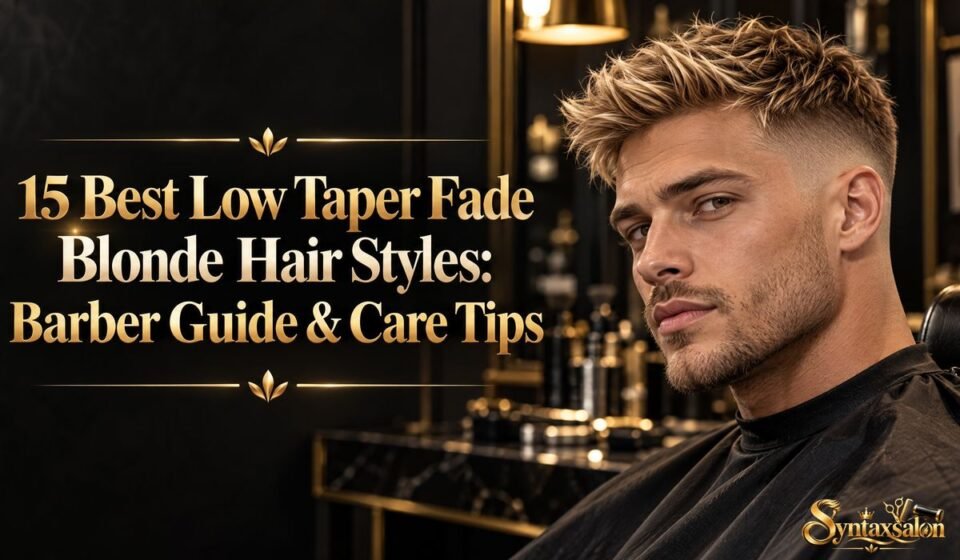

A great haircut can change your whole look, but choosing the right fade and blonde shade isn’t always easy. You might want something clean and modern without losing the texture, volume, or personality of your hair.
A low taper fade with blonde hair is a stylish choice for men who want a modern haircut without making the sides look too dramatic. The gradual fade around the temples and neckline creates a clean finish, while blonde hair adds texture, brightness, and personality. Whether you prefer a messy fringe, fluffy curls, a short crop, or a longer textured top, there are plenty of ways to personalize this haircut.
The best Low Taper Fade Blonde Hair Styles depend on your natural hair texture, face shape, preferred blonde shade, and daily styling routine. Some looks are easy to maintain at home, while others need regular barber visits or extra color care. This guide covers 15 hairstyle ideas, what to ask your barber for, and how to keep your haircut and blonde color looking fresh.
Quick Answer
A low taper fade blonde hairstyle combines gradually shortened hair around the temples and neckline with a blonde top. Choose a textured fringe for a relaxed look, curls for added volume, a Caesar cut for easy styling, or a quiff for a more polished appearance. Ask your barber to keep the taper low and blend it naturally into your top.
What Is a Low Taper Fade on Blonde Hair?
A low taper fade gradually shortens the hair around the temples and neckline while leaving more length on the sides and top than many higher fades. The transition stays close to the natural hairline, making it subtle, neat, and versatile.
When paired with blonde hair, the haircut can look soft and natural or bold and high-contrast, depending on the shade. Platinum and ash blonde create a cooler appearance, while honey and golden blonde add warmth.
Low Taper Fade vs Low Fade vs Skin Fade
| Haircut | Main feature | Overall appearance |
|---|---|---|
| Low taper fade | Gradual shortening around the temples and neckline | Subtle and versatile |
| Low fade | Fade begins low on the sides and blends across a wider area | More visibly faded |
| Skin fade | Hair blends down to bare skin | Sharp and high-contrast |
Which should you choose? Pick a low taper if you want a clean outline while keeping most of your hair. A low fade makes the sides more noticeable, while a skin fade creates the strongest contrast.
Why Does Blonde Hair Change the Look of the Fade?
Blonde shades reflect light differently depending on their tone, texture, and lighting. Pale blonde can make individual strands stand out, while darker blonde often creates a softer, more natural finish. A textured top can emphasize these differences and make the haircut look fuller.
Your roots also affect the final appearance. Natural darker roots can create depth, while an all-over blonde color produces a more uniform look.
Does a Low Taper Fade Suit Your Hair?
One advantage of a low taper is its flexibility. Your barber can adjust the top length, fade height, and outline to suit your hair rather than forcing you into one specific style.
Which Hair Textures Work Best?
- Straight hair: Try a textured fringe, Caesar cut, side part, or slick back.
- Wavy hair: Choose a messy crop, relaxed quiff, or medium-length textured top.
- Curly hair: Keep the curls longer on top and use the taper to define the outline.
- Thick hair: Add layers to reduce bulk and make styling easier.
- Fine hair: Consider a shorter textured crop that creates the appearance of more volume.
What About Face Shape, Density, and Hairline?
| Feature | Styles worth considering |
|---|---|
| Round face | Textured quiff or a little extra height |
| Long face | Fringe or lower-volume crop |
| Square face | Short crop, side part, or natural textured top |
| Receding hairline | Short fringe or a crop that works with the natural hairline |
| Thick, dense hair | Layered top with a blended taper |
| Fine hair | Short textured top with lightweight styling products |
These are starting points, not strict rules. Hair growth patterns, personal preference, and the way your hair sits naturally matter just as much.
15 Best Low Taper Fade Blonde Hair Styles
The following looks offer different options, from casual everyday haircuts to more defined, fashion-forward styles. Each style includes its own description so you can choose a reference before visiting your barber.
1. Blonde Textured Fringe
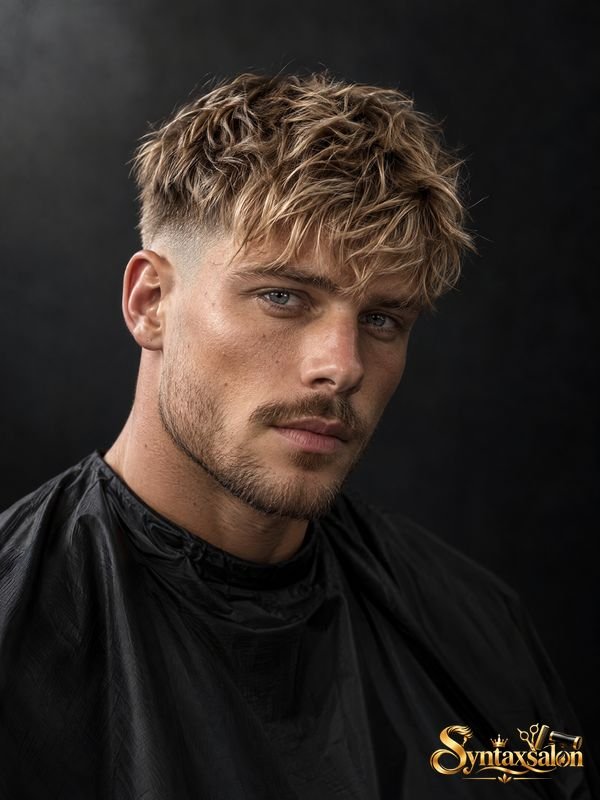
A blonde textured fringe features choppy strands falling naturally toward the forehead, paired with a clean low taper around the temples and neckline. The uneven texture adds movement, making it a strong choice for a relaxed, youthful appearance.
Ask your barber to leave enough length in the fringe and use point cutting to create separation. A small amount of matte clay can help define the strands without making them look greasy.
Best for: Straight or slightly wavy hair and casual styling.
2. Messy Blonde Crop
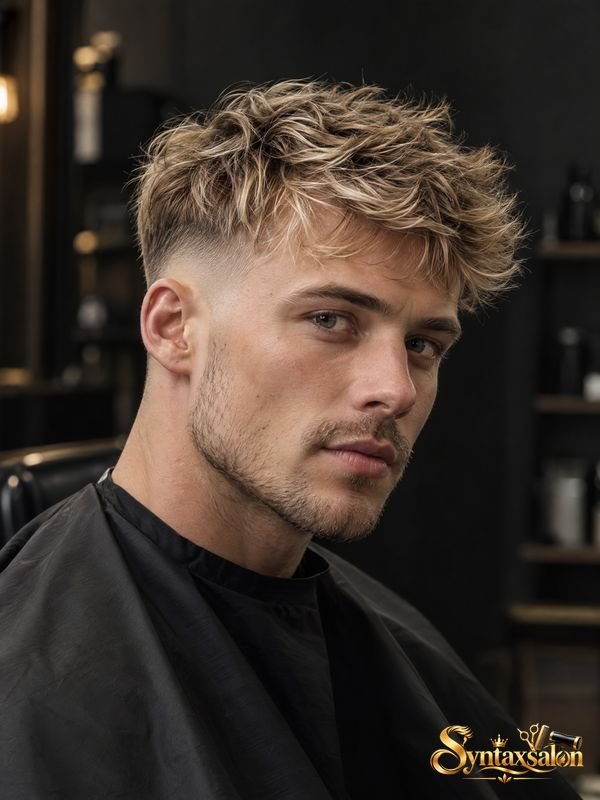
The messy blonde crop combines short sides with a deliberately tousled top. It looks effortless but still benefits from a well-blended taper and carefully layered texture.
Work a small amount of matte paste through dry hair using your fingertips. Avoid making every strand sit perfectly in place; the natural irregularity is part of the style.
Best for: Men who want a modern haircut with a quick morning routine.
3. Ash-Blonde Choppy Crop
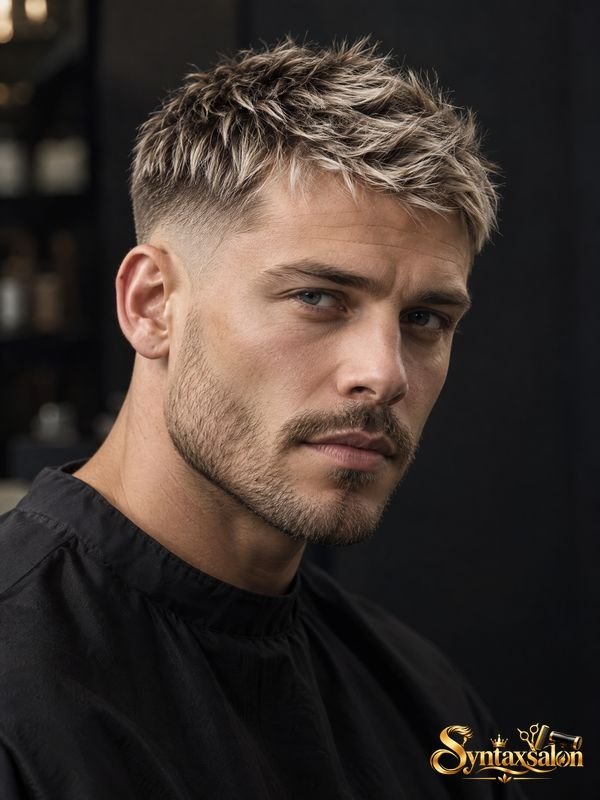
Ash blonde gives a cooler, muted finish than warmer golden shades. Combined with a choppy crop, it creates a sharp but understated hairstyle that works with casual and smart-casual clothing.
Tell your barber you want a short, separated top rather than a flat, uniform crop. If you color your hair, discuss whether your starting shade is suitable for ash blonde and how to maintain the desired tone.
Best for: People who prefer cool blonde shades and defined texture.
4. Curly Blonde Top
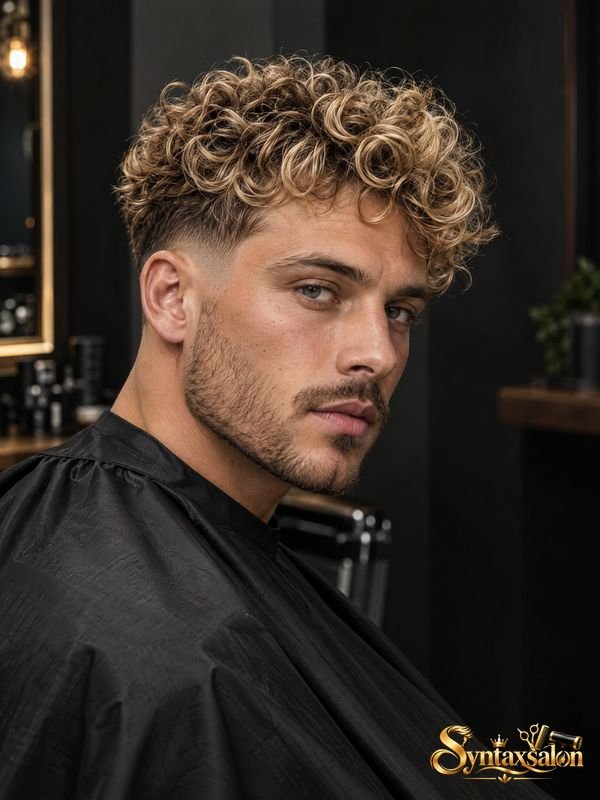
A curly blonde top keeps the natural curls as the main feature while the low taper cleans up the temples and neckline. The contrast between the detailed curls and neat edges gives the haircut a distinctive shape.
Use a lightweight curl cream or leave-in product suited to your hair. Avoid brushing dry curls aggressively, as this can create frizz and disturb their natural definition.
Best for: Naturally curly hair and anyone who wants volume on top.
5. Blonde Wavy Taper
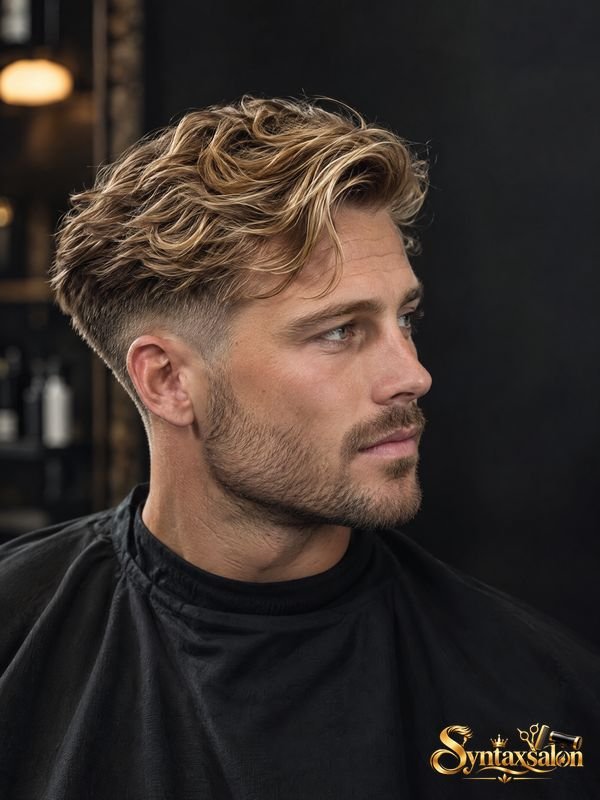
This style lets natural waves fall into a loose, flowing shape while keeping the sides tidy. A low taper provides definition without removing the movement that makes wavy hair attractive.
Ask for a layered top that follows your natural wave pattern. A light styling cream can control flyaways without flattening the hair.
Best for: Naturally wavy hair and a relaxed, modern appearance.
6. Fluffy Blonde Hairstyle

The fluffy blonde hairstyle features airy volume, soft layers, and a slightly lifted finish. It can make the top look fuller while the low taper keeps the overall shape from becoming too wide.
Use a blow-dryer on a moderate setting and lift the roots with your fingers or a vent brush. A lightweight volumizing product can help maintain movement without weighing the hair down.
Best for: Straight or wavy hair with enough length to build volume.
7. Short Blonde Crop
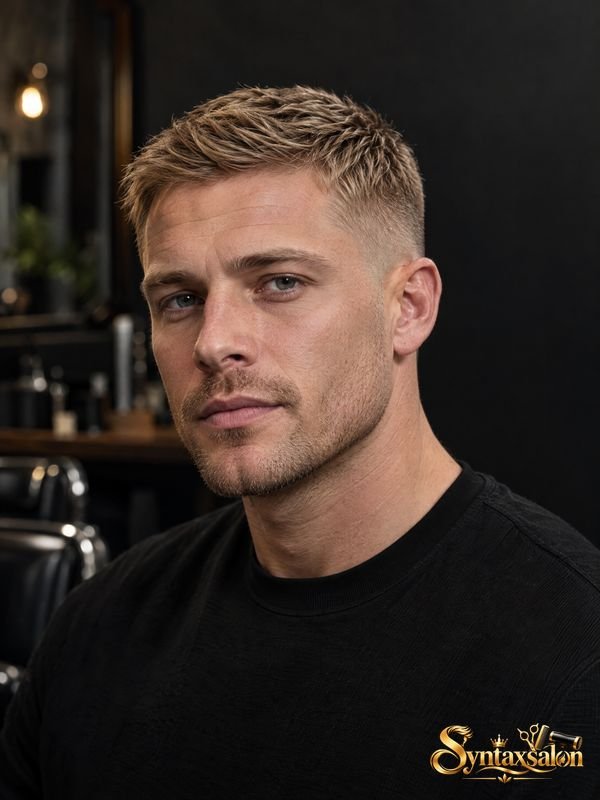
A short blonde crop is practical, neat, and relatively simple to maintain. The shorter top creates a compact shape, while the taper adds a polished finish around the ears and neck.
Ask your barber to keep the crop short but textured, with a low taper rather than an unnecessarily high fade. Styling may require only a little lightweight paste—or no product at all, depending on your hair.
Best for: Busy routines, minimal styling, and understated looks.
8. Blonde Caesar Cut
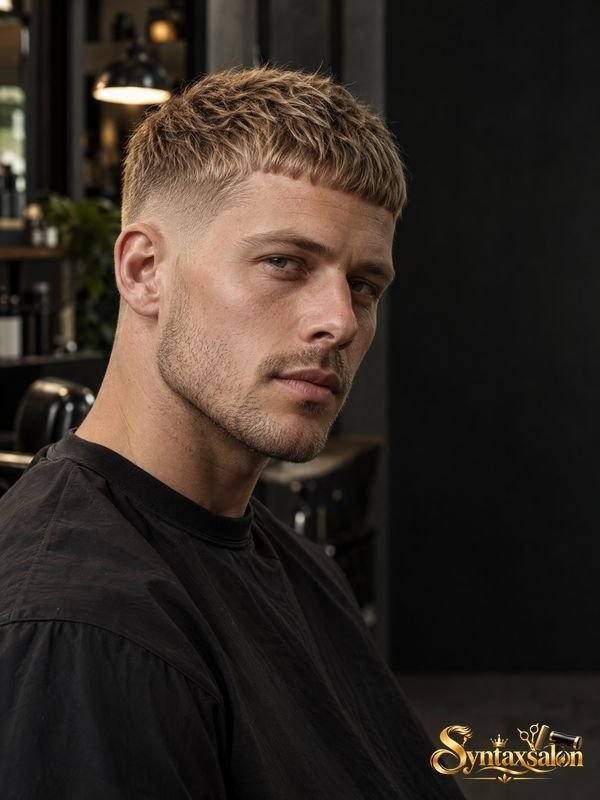
The Caesar cut features a short top with a forward-directed fringe. Pairing it with a low taper modernizes the traditional shape without making the sides overly dramatic.
This haircut works particularly well when the top is kept consistent and the fringe follows the natural hairline. A small amount of matte product can help maintain the shape.
Best for: Short-hair fans who prefer a structured, low-maintenance cut.
9. Blonde Buzz Cut With Low Taper
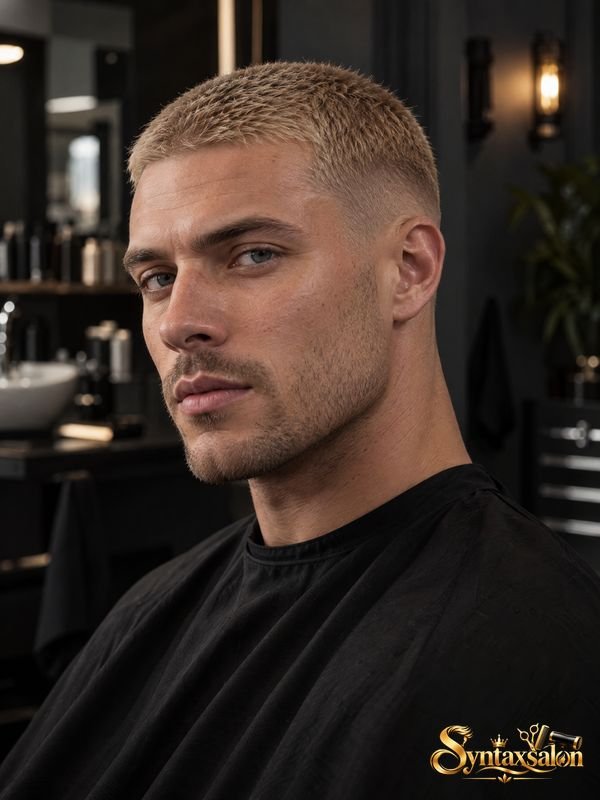
A blonde buzz cut is an uncomplicated option that emphasizes the shape of the head and the clean finish around the temples. The low taper adds detail without requiring a longer top.
Because the hair is short, the blonde color and natural roots may be especially noticeable. Discuss the desired shade with a professional colorist if you plan to lighten your hair significantly.
Best for: Minimal styling and a clean, simple silhouette.
10. Blonde Textured Quiff
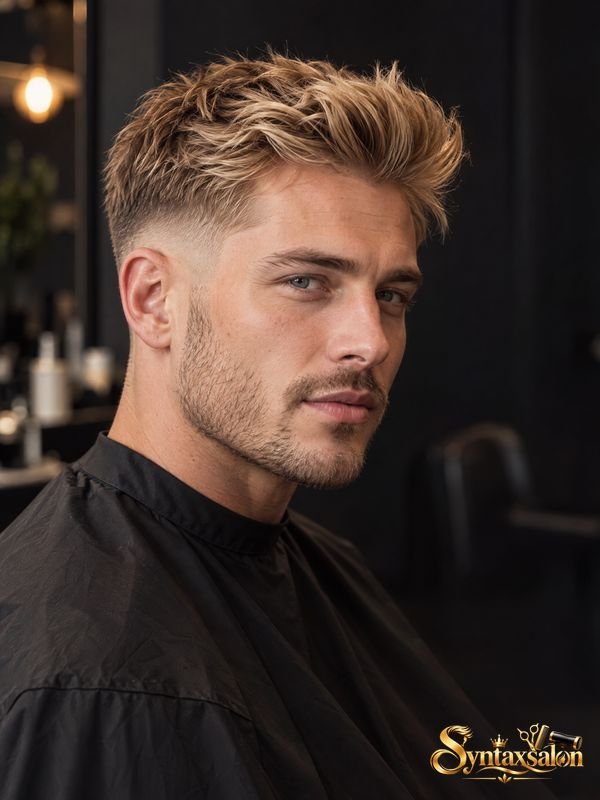
The textured quiff lifts the front of the hair while keeping the rest of the top flexible and natural. A low taper balances the height with clean edges, creating a polished style that is not overly formal.
Use a blow-dryer to lift the front, then apply a small amount of matte paste or cream. Keep the finish soft if you prefer a modern look over a stiff, sculpted quiff.
Best for: Straight or wavy hair and people who like extra height.
11. Blonde Side-Part Taper
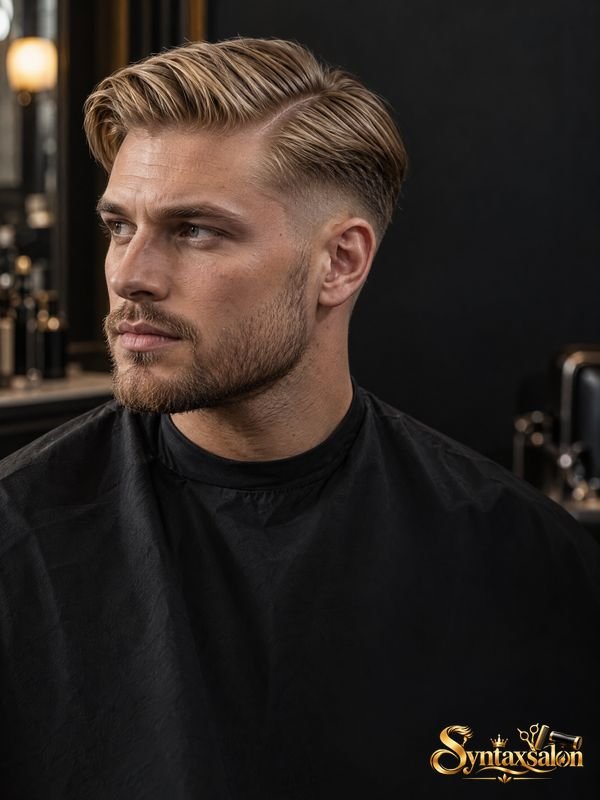
A side-part taper combines a defined parting with a neatly blended low taper. Blonde hair adds brightness, while slightly darker roots can make the part and overall shape easier to distinguish.
Ask your barber whether a natural part or a subtle shaved line will suit your hair growth pattern. A comb and a small amount of flexible styling cream are usually enough to finish the look.
Best for: Work, formal events, and smart-casual outfits.
12. Blonde Slick Back
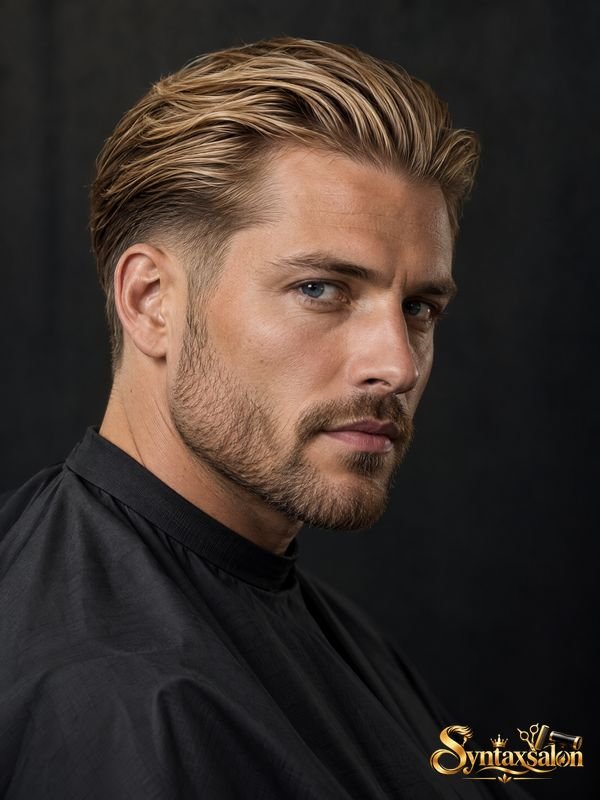
The slick back keeps the top longer and directs the hair away from the forehead. Combined with a low taper, it creates a clean outline while preserving a mature, classic appearance.
Apply a suitable styling cream to slightly damp hair and comb it backward. If your hair is naturally fine, avoid heavy products that can make the top look flat or oily.
Best for: Medium-length hair and a more refined finish.
13. Blonde Blowout Taper
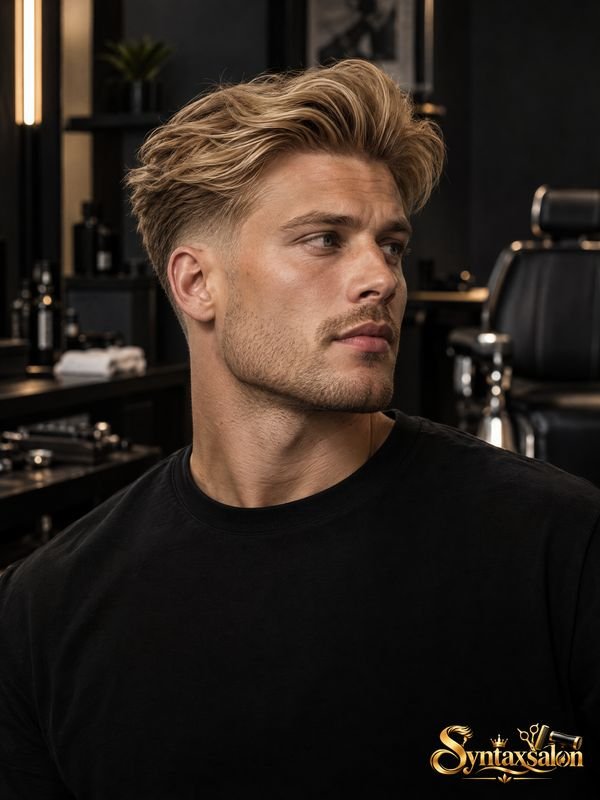
A blowout taper features volume and lift through the top, with the hair styled away from the sides. The low taper creates a clean frame around the hairstyle without taking away its fullness.
Use a blow-dryer and a vent brush to direct the hair upward and outward. A lightweight finishing product can provide hold while keeping the result flexible.
Best for: Hair that holds volume and people who enjoy styling.
14. Blonde Modern Mullet With Low Taper
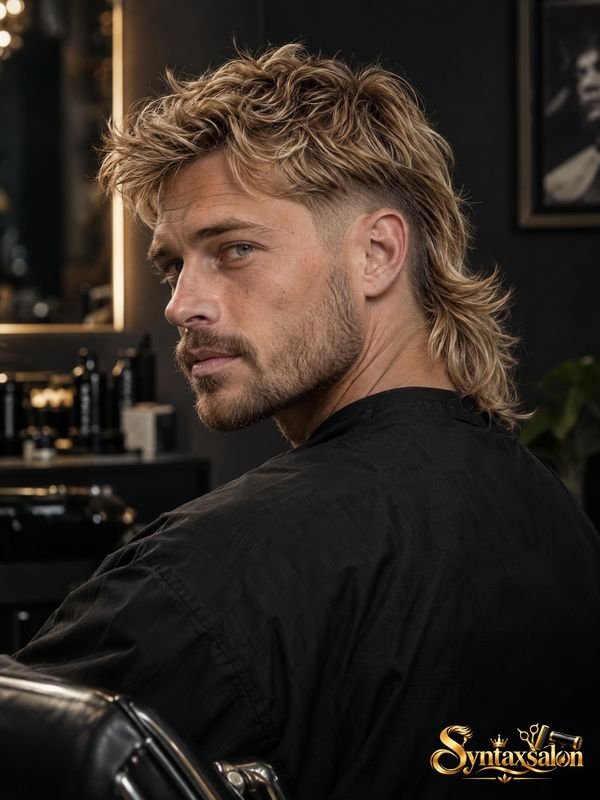
A modern mullet keeps more length at the back while using a low taper around the temples and neckline. The blonde color highlights the different lengths, while textured layers help the transition look intentional.
Be clear about how much length you want to retain at the back. Ask for a balanced shape rather than a dramatic contrast if you want a more wearable everyday version.
Best for: Fashion-forward looks and people who want a distinctive silhouette.
15. Longer Blonde Textured Top
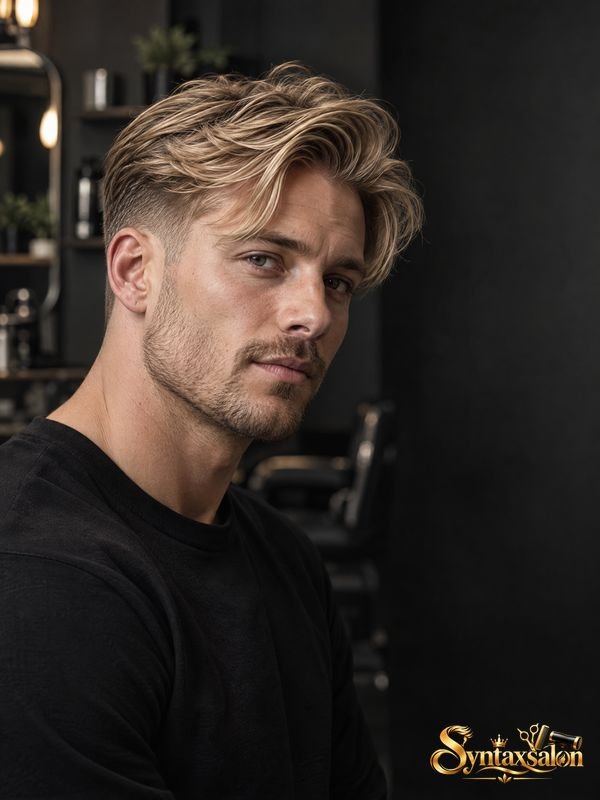
This variation leaves the top longer so it can be styled forward, sideways, or loosely swept back. The low taper prevents the sides from looking bulky and creates a neat outline around the ears.
Ask your barber for layers that preserve movement and work with your natural hair texture. Use a lightweight styling cream to control flyaways while keeping the top flexible.
Best for: Men who want styling options without committing to a short crop.
How Do You Ask a Barber for This Haircut?
A reference photograph helps communicate the overall look, but it may not explain the exact fade height, top length, or finish you want. Combine a photo with a few clear instructions so your barber can adapt the cut to your hair.
What Reference Photos Should You Bring?
Bring two or three photographs showing the details that matter most:
- A front view to show the fringe or top shape.
- A side view to show the low taper and blending.
- A back view to show the neckline.
- A close-up of the blonde shade you want, if you’re planning a color change.
Choose examples with a similar hair texture and density to yours. A cut shown on thick, curly hair may not look identical on fine, straight hair.
What Exactly Should You Say?
You can use this simple barber script:
“I’d like a low taper fade around my temples and neckline, with a smooth, natural blend. Please keep enough length on top for my chosen style and don’t take the fade too high. I’d also like advice on a blonde shade that suits my natural hair and maintenance routine.” Copy barber script
Then show your chosen reference and explain whether you want a natural, textured, fluffy, or polished finish.
How Do You Style and Maintain It?
A good haircut is only part of the result. Your daily routine, product choice, and color-care habits help determine how the style looks between barber visits.
What Is the Fastest Daily Styling Routine?
- Start with clean hair or lightly dampen it if needed.
- Apply a small amount of product suited to your hair type.
- Use your fingers, a comb, or a brush to create the intended shape.
- Blow-dry only when necessary, using a suitable heat setting.
- Finish with a light hold product if your style needs extra control.
Short crops often need very little styling, while quiffs, blowouts, and fluffy tops usually require more time.
How Often Should You Refresh the Cut and Color?
| Maintenance | General starting point |
|---|---|
| Low taper touch-up | About every 2–4 weeks, depending on desired sharpness |
| Short crop trim | About every 3–6 weeks |
| Longer top trim | About every 6–10 weeks, depending on shape |
| Blonde color refresh | Depends on regrowth, shade, hair condition, and color technique |
These are estimates rather than fixed rules. If you prefer a very sharp outline, you may want more frequent trims. Color appointments should be planned with a qualified colorist, particularly after bleaching.
How Do You Keep Blonde Hair Bright Without Over-Toning?
- Use a shampoo and conditioner designed for color-treated hair.
- Use purple shampoo only when appropriate for your shade and follow its directions.
- Avoid excessive washing if it dries out your hair.
- Limit high heat and use a suitable heat protectant.
- Protect your hair from prolonged sun exposure when practical.
- Follow your colorist’s advice about toning and root maintenance.
Purple shampoo can help reduce unwanted yellow tones in some blonde hair, but using it too often may leave the color dull or overly cool. It also cannot repair bleach damage.
What Are the Risks and Common Mistakes?
The haircut itself is generally straightforward, but lightening dark hair to blonde can require chemical processing. Hair condition, previous color treatments, and scalp sensitivity all affect how safely the desired shade can be achieved.
What Should You Know Before Bleaching?
Bleaching can make hair dry, fragile, or prone to breakage. Significant lightening may require multiple sessions, especially when starting with dark hair or trying to reach a pale blonde.
Before coloring:
- Tell your colorist about previous dye, bleach, relaxers, or other chemical treatments.
- Ask whether your target shade is realistic in one session.
- Follow the product’s allergy-alert and strand-test instructions.
- Do not continue a treatment if you experience strong burning or irritation.
- Seek professional advice if your scalp is irritated or your hair is already badly damaged.
Avoid trying to force a very light shade in one appointment if your hair is not in suitable condition.
Which Haircut and Color Mistakes Should You Avoid?
Taking the taper too high: This can change the subtle shape you originally wanted. Show a reference and specify that the taper should remain low.
Removing too much length: A textured fringe, quiff, or mullet needs enough top length to achieve its intended shape.
Choosing a blonde shade without considering your starting color: The final result depends on your natural color, previous treatments, and the lightening process.
Using too much product: Heavy waxes and creams can flatten fluffy hair and make fine hair appear oily.
Ignoring maintenance: A clean fade grows out over time, while blonde roots and tone may change between color appointments.
What Are the Best Alternatives?
If a low taper fade doesn’t match your preferred style, several alternatives can offer a similar clean finish.
| Alternative | Why consider it? |
|---|---|
| Low fade blonde haircut | Creates a more visible fade across the sides |
| Mid taper fade | Places the taper higher for a more noticeable outline |
| Temple fade | Focuses the fade around the temples |
| Blonde undercut | Creates stronger contrast between the top and sides |
| Blonde crew cut | Offers a short, practical shape |
| Blonde textured mullet | Keeps more length at the back with a statement finish |
Choose based on how much contrast you want, how often you’re willing to visit a barber, and whether you prefer short or longer hair on top.
Frequently Asked Questions
Does a low taper fade look good on blonde hair?
Yes. A low taper can complement blonde hair by creating a neat outline while allowing the top’s texture and shade to stand out. The final effect depends on the chosen blonde tone, hair length, and styling.
Is a low taper better than a low fade?
Neither is universally better. A low taper is generally more subtle because it focuses on the temples and neckline. A low fade blends across a wider area of the sides, creating a more noticeable faded appearance.
Is a low taper fade a mullet?
No. A low taper fade describes how the hair is shortened around the temples and neckline. A mullet describes a shape with shorter hair around the front and sides and more length at the back. The two can be combined in a modern mullet.
Can I get a low taper fade with blonde curly hair?
Yes. Keeping curls longer on top and tapering the temples and neckline can create a balanced look. Your barber should account for shrinkage, curl pattern, and the amount of volume you want to preserve.
How do I maintain blonde hair after bleaching?
Use color-safe products, limit excessive heat, and follow your colorist’s guidance for toning and regrowth. Because bleaching can weaken hair, avoid unnecessary repeat processing and discuss any signs of damage with a professional.
Conclusion
A low taper fade paired with blonde hair offers plenty of room for personal style, from a clean buzz cut to a textured fringe, fluffy top, quiff, or modern mullet. The best choice is the one that works with your natural hair texture, suits your preferred look, and fits the time you’re willing to spend on styling and color care.
Before your next appointment, save a few reference photos, decide how much length you want to keep, and discuss your blonde shade with your barber or colorist. A clear plan will help you get a haircut that looks good in the chair and remains manageable at home.