
Ever sat in the barber’s chair, heard the clippers buzz on, and realized halfway through that you weren’t totally sure what you’d actually asked for? That awkward moment nodding along to “low fade, mid fade, whatever looks good” is more common than most guys admit, and it’s usually why fade haircuts for Black men don’t turn out the way they were pictured.
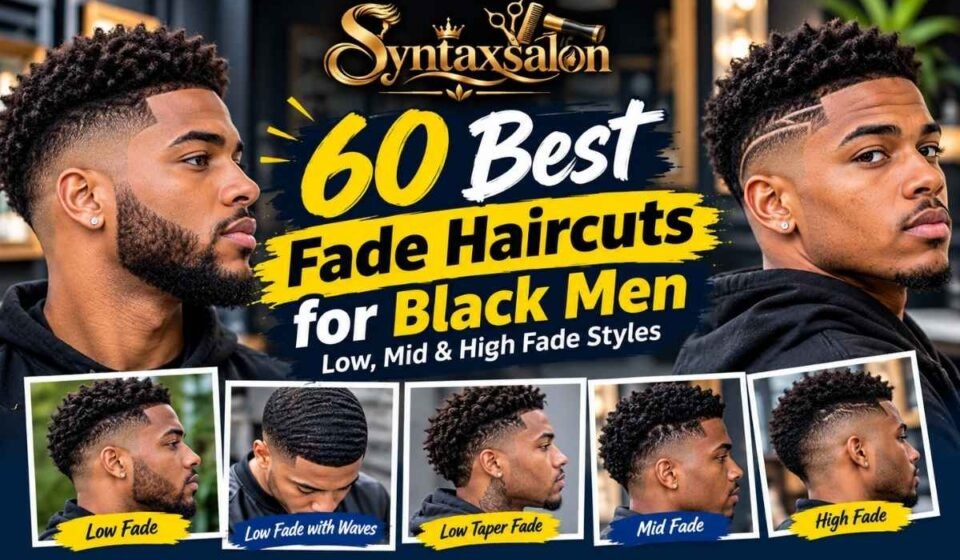
That’s exactly what this guide fixes. Below, you’ll find 60 of the best fade haircuts for Black men, broken down by height, texture, and finish, plus the practical stuff barbershop guides skip: how your hair type changes which fade actually works, what to say in the chair so you get it right the first time, and how often you’ll realistically need to go back.
Quick Answer
Fade haircuts for Black men work because the technique blends seamlessly into coily and kinky textures — something a plain trim can’t do. The most requested styles right now are the low taper fade (versatile, office-friendly), the skin fade (sharp contrast, pairs with beards and designs), and the burst fade (built for curly tops, twists, and mohawks). Most fades need a touch-up every 2 to 3 weeks, with skin fades growing out fastest.
Why Does the Fade Work So Well with Black Hair?
Coily and kinky hair — usually classified in the 4A to 4C range — grows in a tight curl pattern that holds its shape close to the scalp. Fade haircuts for Black men take advantage of that. Because the hair coils rather than lies flat, the gradient from skin to length reads cleanly, without the flyaway blending issues straight hair sometimes runs into on the same cut.
There’s also a cultural weight behind it. Fade haircuts for Black men have been a staple in Black barbershops since at least the 1980s, tied closely to hip-hop culture and passed down as a craft between barbers and clients. It’s not just a haircut trend — it’s a technique that was refined specifically for textures that other styles often ignored.
Fade vs. Taper: What’s the Difference?
People use these words like they mean the same thing, and honestly, they overlap enough to cause real confusion in the chair. Here’s the actual distinction.
| Fade | Taper | |
| How short it gets | Blends all the way down to bare skin at some point | Gets shorter but never fully disappears to skin |
| Contrast level | High — sharp, visible transition | Softer, more gradual |
| Best for | Bold looks, designs, beard connections | Office settings, conservative or classic styles |
| Upkeep | Every 1–3 weeks depending on height | Every 3–4 weeks |
| Good starting point if unsure | Skip it at first | Yes — start here |
If you’re newer to fades, a taper is the safer entry point. You can always ask your barber to push toward a true skin fade later once you know how the look sits on you. Either way, both fall under the same broad umbrella of fade haircuts for Black men, so don’t stress too much over the exact label when you’re first describing what you want.
What Are the Best Fade Haircut Styles for Black Men?
This is where things get specific. Every one of these fade haircuts for Black men notes the fade height, what it pairs well with, and who it tends to suit — so instead of just browsing pictures, you can actually pick out language to use with your barber.
1. Low Fade
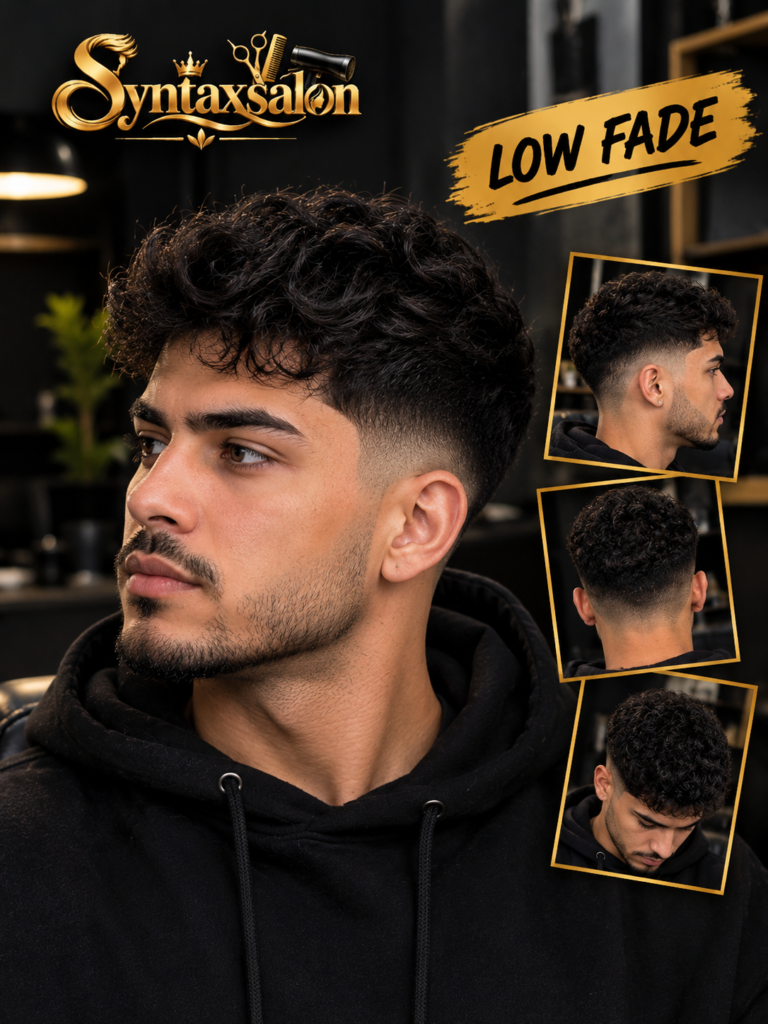
Among low, mid, and high fade haircuts for Black men, the low fade starts right above the ears and stays close to the hairline, making it the most conservative option on this list. It’s a smart pick for client-facing jobs or anyone who wants a clean look without a dramatic transition. Pairs well with almost any top length.
2. Low Fade with Waves
Add 360 waves on top of a low fade and you get one of the most timeless combinations in Black men’s hairstyling. The low fade keeps the sides tidy while the waves do the visual work. Requires consistent brushing and a durag to maintain the pattern.
3. Low Taper Fade
A low taper skips the skin entirely, tapering the hair down without exposing bare scalp. It’s the single most versatile, workplace-safe option here — clean but not severe, and it grows out more gracefully than a skin fade.
4. Low Temp Fade
This variation concentrates the fade around the temples only, leaving the back with a little more length. It’s a subtler way to get definition without committing to a full-perimeter fade.
5. Mid Fade
Right in the middle of the low, mid, and high fade haircuts for Black men covered here, the mid fade starts at the temples rather than above the ears, giving you more contrast than a low fade without the boldness of a high one. It’s the middle-ground choice for guys who want their haircut to actually look cut.
6. Mid Fade with Curls
Pairing a mid fade with natural curls on top lets the texture do the talking. The fade frames the curl pattern instead of competing with it, which is why this combination shows up so often in modern barbershop portfolios.
7. Mid Fade with Beard
When the mid fade blends directly into a full, shaped beard, you get one continuous line from temple to jaw. It’s a mature, put-together look that works equally well in the office and on the weekend.
8. Medium Fade Textured Crop
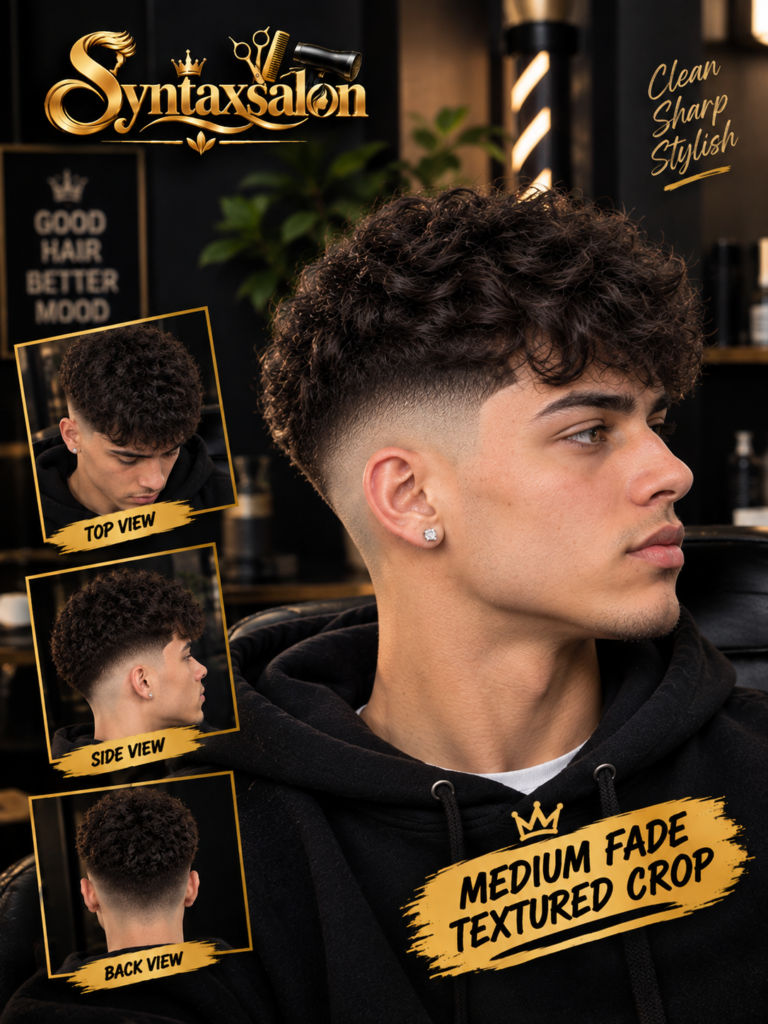
A textured crop on top — short, choppy, styled forward or messy — paired with a medium fade gives you a low-maintenance, modern silhouette. Minimal daily styling required.
9. High Fade
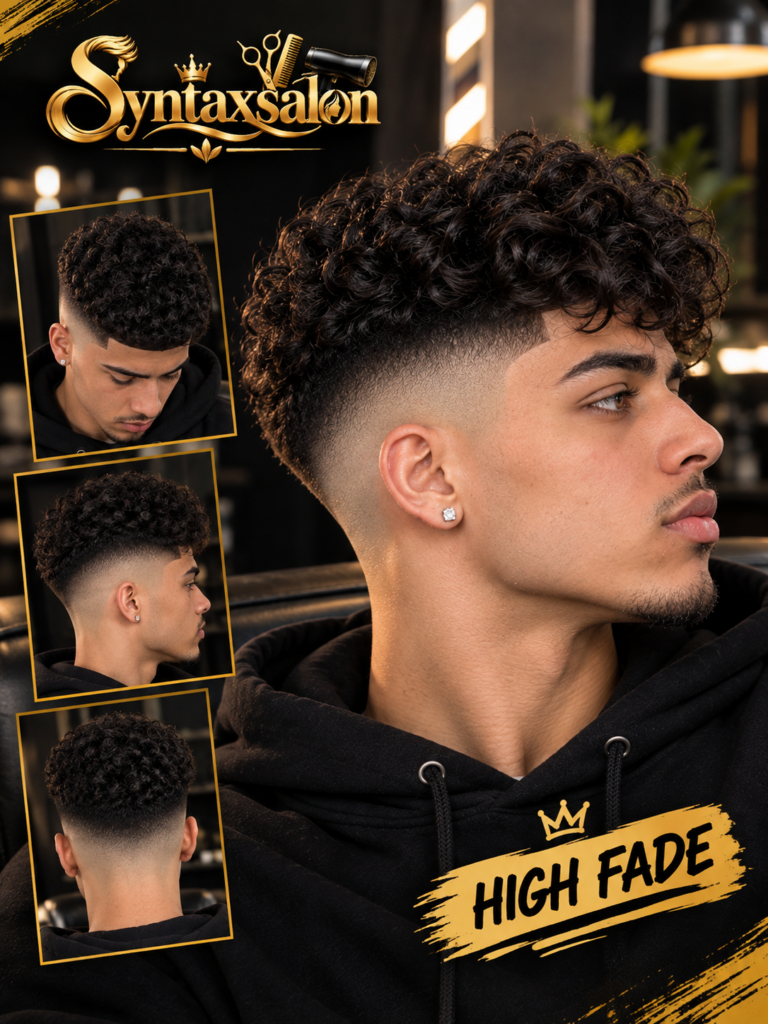
One of the boldest fade haircuts for Black men on this list, the high fade begins well above the temples, creating sharp contrast rivaled only by a full skin fade. It’s a bold, youthful statement — best suited to guys who don’t mind a little more attention.
10. High Skin Fade with Waves
This combo takes the drama of a high fade and pairs it with the polish of trained waves. The visual effect is striking: bare skin at the sides, rippling texture on top.
11. High Top Fade
An icon from the ’80s and ’90s that never really left. The top is grown tall, flat, and boxy, while the sides drop into a high skin fade. It takes real barber skill to keep the flat top even.
12. High Fade Afro
A rounded natural afro sitting above a high fade lets your natural texture stand as the centerpiece while the sides stay sharp and defined. Low daily effort, high visual payoff.
13. High Fade with Design
Adding a shaved line, geometric pattern, or personal touch into the faded section turns the sides into a canvas. This one needs re-sharpening every 1 to 2 weeks to stay crisp.
14. Skin Fade
Of all the fade haircuts for Black men on this list, the skin fade blends all the way to bare scalp for maximum contrast. It’s the sharpest-looking fade you can get, but it also grows out the fastest since any new growth shows immediately against skin.
15. Burst Fade
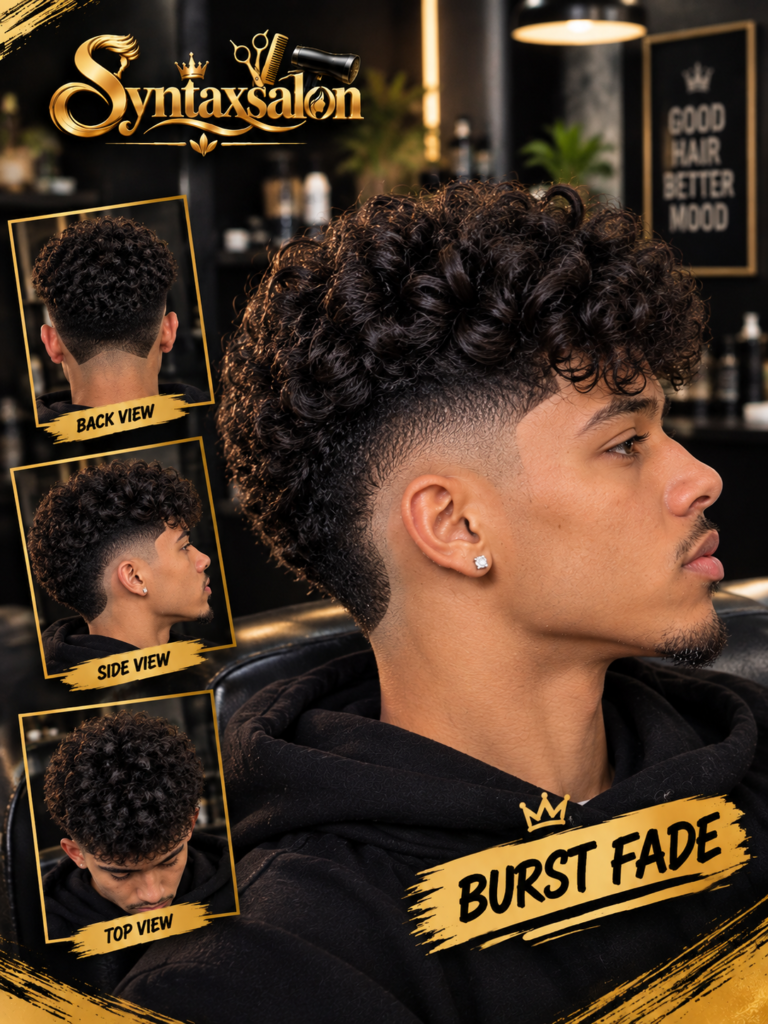
A favorite among curly-top fade haircuts for Black men, the burst fade curves in a semicircle around the ear rather than running straight down the back of the head, leaving the back untouched. It’s especially flattering with curly tops, twists, and mohawks.
16. Burst Fade Mohawk
A textured strip down the center with a burst fade curling around the ears on each side. Bold, but more wearable day-to-day than a full mohawk fade since the back stays fuller.
17. Drop Fade
The drop fade curves downward behind the ear rather than staying level, adding a rounded, dynamic line to the cut. It looks especially sharp from the side profile.
18. Drop Fade with Waves
The curved line of a drop fade complements the circular motion of trained waves, creating a cohesive, intentional look rather than two separate style choices competing for attention.
19. Temp Fade / Temple Fade
Also called a Brooklyn fade, the temple fade concentrates the blending specifically around the temples and neckline, leaving most of the top untouched. It’s the go-to option if you want to preserve height and length up top.
20. Fade with Lineup / Edge-up
No fade looks finished without a crisp lineup at the hairline, temples, and beard. This is less a standalone style and more a mandatory finishing touch — the difference between a haircut looking “almost done” and looking sharp.
21. Fade with 360 Waves
Waves need short, moisturized hair and daily brushing to develop, and a fade gives them the clean foundation to do that. Any fade height works, though low and mid fades are the most forgiving while waves are still training.
22. Fade with Afro
A rounded, natural afro on top with any fade height underneath keeps your texture as the focal point. This is one of the lowest-maintenance combinations on this list.
23. Fade with Dreadlocks
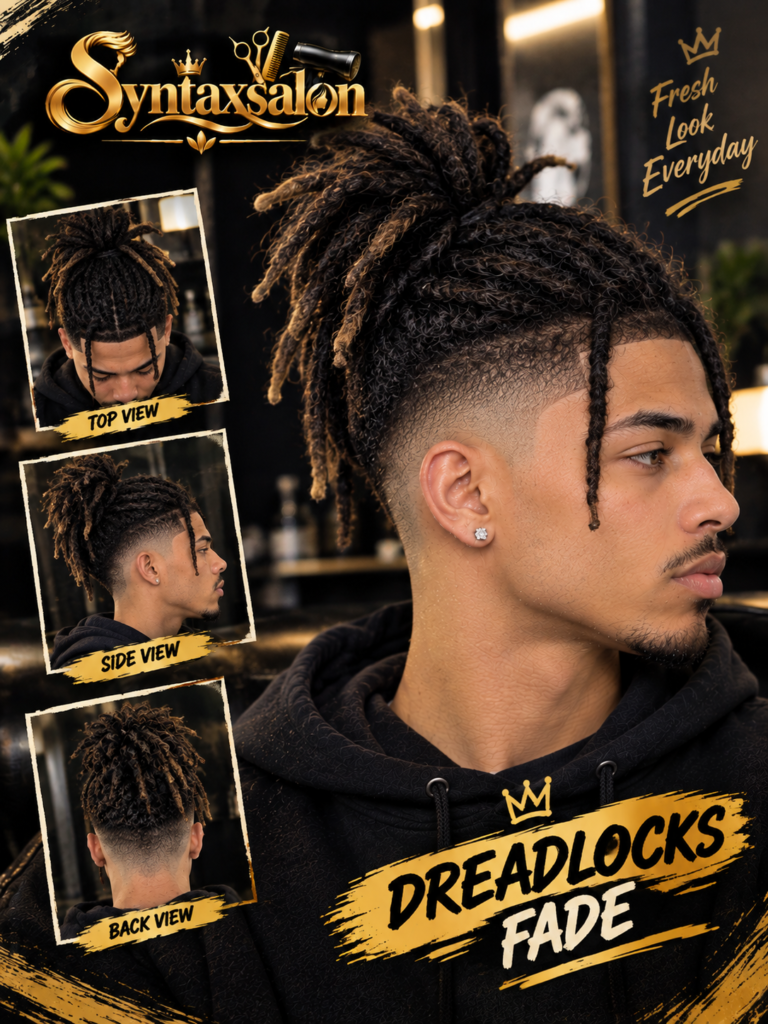
Locs on top with a skin fade on the sides is one of the most requested modern looks for Black men. It’s sharp, intentional, and looks especially clean when the fade connects into a faded beard.
24. Fade with Braids
Braids or cornrows laid flat on top with a fade underneath gives you a protective style that still reads as polished and current rather than purely functional.
25. Fade with Twists
Two-strand twists on top paired with a low or mid fade balance texture and structure. It also sets you up nicely for a twist-out down the line if you want to switch things up.
26. Fade with Sponge Curls
A sponge tool creates small, defined coils on top that pop against a clean fade. It’s one of the more DIY-friendly styles to maintain between barber visits.
27. Fade with Hard Part
A shaved line separating the top from the fade — the hard part — adds a crisp, deliberate detail that works with almost any top length or texture.
28. Frohawk Fade
An afro-mohawk hybrid: a fuller textured strip down the middle with a fade on both sides. Bold without the full commitment of a shaved mohawk.
29. South of France Fade
A relaxed, longer top brushed forward or side-swept, paired with a low or mid fade. Softer and more casual than most fades on this list, with a European-inspired finish.
30. Buzz Cut Fade
The lowest-maintenance option here — hair buzzed evenly short across the top, finished with a fade at the sides and a sharp lineup at the hairline. No daily styling required at all.
31. Faux Hawk Fade
A softer take on the mohawk fade, this style leaves a subtle raised strip down the center without shaving the sides completely bare. Works well with a drop fade for extra dimension.
32. High Fade with Kinky Top
Tightly coiled 4C hair left natural on top, contrasted against a high fade on the sides. The tighter the curl, the more dramatic the contrast against bare skin.
33. Low Fade Haircut for Black Boys
For younger guys, a low fade keeps things age-appropriate and easy to maintain between school and sports. It’s subtle enough for most dress codes while still looking freshly cut.
34. 2 Fade Haircut for Black Men
“2 fade” usually refers to using a #2 guard as the shortest section of the blend rather than going all the way to skin. It’s a slightly softer alternative to a true skin fade with a bit less upkeep.
35. Fade with Full Beard
When the fade on the sides connects seamlessly into a full, shaped beard, the whole look reads as one continuous, deliberate line rather than two separate grooming choices.
36. Shadow Fade
A shadow fade uses clippers only — no razor — to create a soft, blurred gradient instead of a hard line down to skin. It’s a subtler alternative for guys who want dimension without the starkness of a true skin fade.
37. Ice Pick Fade
A sharp, precise variation where the fade line is cut with exaggerated precision, almost like it was carved rather than blended. It’s a statement look that photographs especially well.
38. Curly Fade
Any fade height paired with naturally curly or coily hair left long enough to show its pattern. The curl does most of the visual work; the fade just keeps the sides in check.
39. Bald Fade
Essentially another name for the skin fade — hair blended completely down to bare scalp. Expect to be back in the chair every 10 to 14 days to keep the line sharp.
40. Blowout Fade
A high-volume top, often achieved with a blow dryer and pick, sitting above a skin or high fade. This one leans dramatic and works best for special occasions or guys who enjoy daily styling.
41. Undercut Fade
Similar in spirit to a disconnected undercut but blended rather than shaved with a hard line. It gives you the dramatic length contrast of an undercut with a softer, more forgiving transition.
42. V-Part Fade
A V-shaped parting cut into the hairline at the back, paired with a fade on the sides. It’s a small but noticeable detail that adds personality without going as bold as a full shaved design.
43. Fade with Cornrows
Straight-back or patterned cornrows on top with a fade underneath is a protective, low-daily-effort style that still looks sharp and intentional at the sides.
44. Low Bald Fade
A skin fade that starts its transition lower on the head, right around the ears. It gives you the sharp contrast of a true skin fade with a slightly more conservative overall footprint.
45. Taper Fade with Beard
A taper on the sides connecting into a full or medium beard. Since a taper never exposes bare skin, this combination reads as polished but noticeably softer than a skin-fade-and-beard pairing.
46. Fade with Tribal Design
Geometric or tribal-inspired patterns shaved into the faded section turn the sides into a personal statement piece. Needs frequent touch-ups — every 1 to 2 weeks — to stay sharp.
47. Comb Over Fade
Longer hair on top combed to one side, contrasted against a fade at the sides. A classic, versatile combination that works from casual to formal settings.
48. Pompadour Fade
Volume swept upward and back on top, paired with a fade for contrast underneath. Requires some daily product and styling time, but it’s a dramatic, retro-leaning look.
49. Quiff Fade
A shorter, more relaxed cousin of the pompadour — hair swept up and slightly back at the front, fading into the sides. Easier daily styling than a full pompadour.
50. Spiky Fade
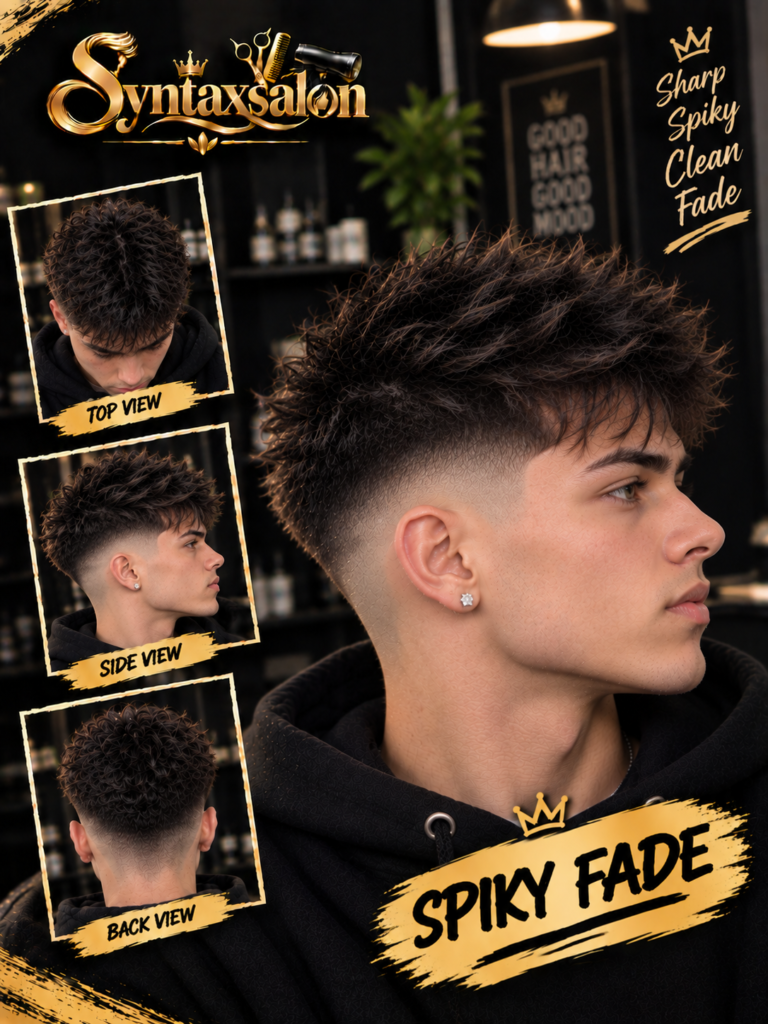
Textured, piecey styling on top held up with a matte product, paired with any fade height. Low commitment day to day since the fade itself needs minimal attention between cuts.
51. Fade with Waves and Beard
Trained 360 waves on top, a clean fade at the sides, and a connected beard underneath. This three-part combination is one of the most requested “complete look” requests in modern barbershops.
52. Zig Zag Design Fade
A zig-zag line shaved into the fade adds visual movement without the commitment of a full geometric pattern. A good starter design if you’ve never had shaved detailing before.
53. Fade with Curly Top and Full Beard
Natural curls left long on top, a fade at the sides, and a full beard tying the whole face together. This combination puts texture front and center from top to chin.
54. Low Drop Fade
A drop fade that starts its curve lower, right around the ear, rather than higher up the head. Slightly more subtle than a standard drop fade while keeping the same curved silhouette.
55. High Drop Fade
The same curved drop-fade line, but starting much higher on the head for maximum contrast. This is a bold, attention-grabbing variation best suited to guys already comfortable with high fades.
56. Temple Fade with Waves
Concentrating the fade at the temples only, while trained waves ripple across the rest of the head, gives you height retention and texture at the same time.
57. Skin Fade with Beard Connection
The sharpest, most contrast-heavy pairing on this list — bare skin at the sides blending directly into a fully connected, sculpted beard. Expect the most frequent touch-up schedule of any style here.
58. Low Fade with Line Up
A low fade finished with a precise, square lineup at the forehead and temples. Subtle at the sides, sharp at the front — a good balance for guys who want definition without drawing too much attention.
59. Mid Fade with Line Up
The added contrast of a mid fade combined with a crisp lineup gives you noticeably more definition than the low-fade version, while still staying wearable in most professional settings.
60. High Fade with Tapered Beard
A high fade on the sides paired with a beard that’s been tapered rather than left full and boxy. The tapered beard softens the boldness of the high fade slightly, balancing the two.
What Happens to a Fade on Black Hair When It Dries?
Wet hair looks deceptively longer and flatter than it actually is, which is exactly why fades can look off right after a wash. As coily and kinky hair dries, it shrinks — sometimes significantly — and springs back into its natural curl pattern. A fade that looked perfectly blended wet can look shorter on top and slightly different in contrast once it’s fully dry.
This is worth mentioning to your barber, especially if you’re getting cut on wet hair. Ask them to account for shrinkage, or better yet, get your fade cut on dry or mostly-dry hair so what you see in the mirror is closer to what you’ll actually be wearing day to day. It’s one of the small details that separates good fade haircuts for Black men from ones that look off within a day or two.
Which Fade Suits Your Hair Type?
Not every fade behaves the same way on every texture. Matching the fade to your specific curl pattern makes a real difference in how clean the final result looks, which is part of why fade haircuts for Black men aren’t one-size-fits-all the way a generic buzz cut might be.
Fades for 4A, 4B, and 4C Hair
- 4A (looser coils): Drop fades and burst fades show off the curl definition well, since the pattern is still visible against the gradient.
- 4B (Z-pattern coils): Mid fades and temple fades tend to work best — dense enough on top to stay distinct from the faded sides.
- 4C (tightly coiled): Low taper fades and skin fades paired with a short afro or sponge-curled top create the cleanest contrast, since the tight texture itself becomes the visual statement.
Fades for Straight or Wavy Hair
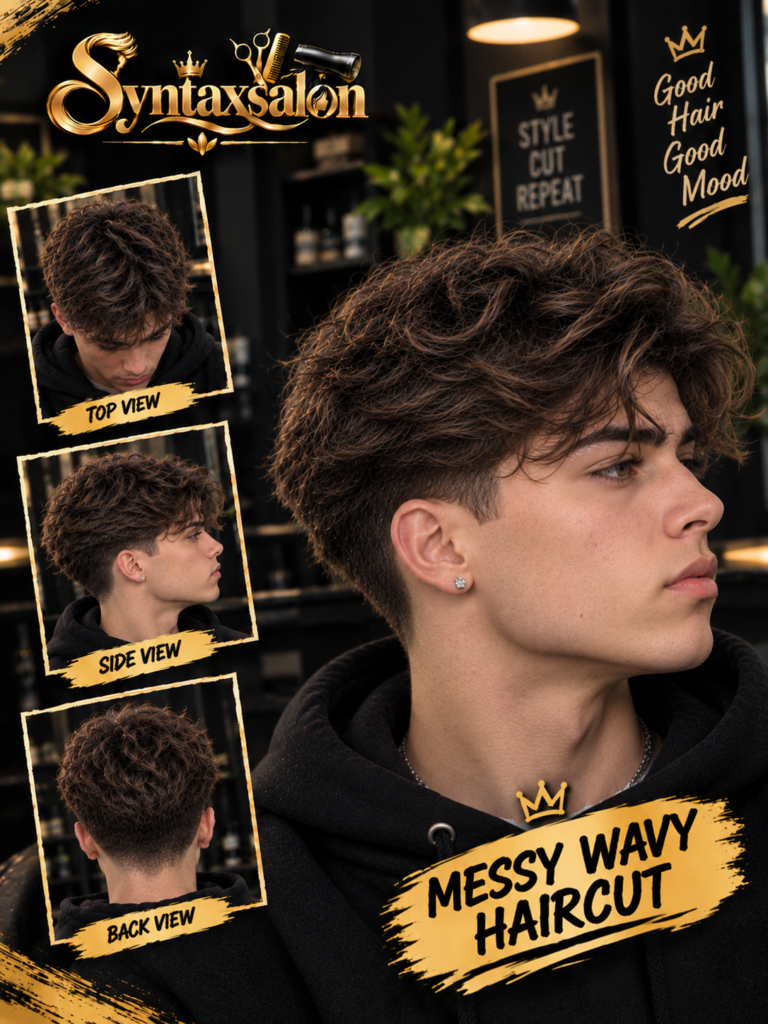
Fades aren’t exclusive to coily textures — straight and wavy hair can absolutely be faded too. The main difference is upkeep: straight hair grows out more visibly at the roots and can show the fade line growing out faster in a way that reads as messy sooner than it would on coily hair.
How Do You Choose the Right Fade?
Beyond texture, a few other factors should shape your decision before you sit down in the chair. The best fade haircuts for Black men take face shape and lifestyle into account just as much as hair type.
By Face Shape
- Round face: A high or skin fade adds vertical length; low fades can make a round face look fuller.
- Square or angular face: A low fade or taper softens the jawline without losing definition.
- Long face: A low fade with more volume on top adds width and balance.
- Oval face: Most fades work — this is the most forgiving face shape overall.
By Lifestyle or Job
- Corporate or client-facing roles: Stick with a low taper it reads as clean and conservative and holds its shape longest between cuts.
- Creative or casual workplaces: Drop fades, burst fades, or a design have more room to be expressive.
- Athletes or frequent gym-goers: A skin fade or buzz cut fade minimizes daily upkeep and sweat-related styling hassle.
What Should You Tell Your Barber?
Walking in with vague direction is the fastest way to end up disappointed. Cover these four things clearly, and you’ll get a much more accurate cut — this is true for basically any of the fade haircuts for Black men covered in this guide.
- Fade height — low, mid, or high.
- Finish — skin/bald, taper, or somewhere in between.
- Top length — long, medium, short, or buzzed (use inches if you can).
- Hairline shape — square, rounded, or natural.
Clipper Guard Numbers, Explained
Barbers commonly use guard numbers from 0 to 8 to communicate exact lengths. The lower the number, the shorter the cut.
| Guard | Length | Common Use |
| #0 | Skin/near skin | Bottom of a skin fade |
| #1 | ⅛ inch | Shortest section before skin |
| #2 | ¼ inch | Common starting point for a low fade |
| #3 | ⅜ inch | Popular mid-section guard on a taper fade |
| #4 | ½ inch | Where the fade blends into longer hair on top |
Some men refer to a “3:2:1 fade” as shorthand for this kind of guard progression — for example, a #3 at the top of the fade, #2 in the middle, and #1 near the skin. It isn’t an official industry term with one fixed definition, but describing your fade this way, guard by guard, gives your barber exact specifications instead of a vague request.
Bringing one or two reference photos also helps enormously — just make sure the model in the photo has a similar hair texture and hairline to yours, since a fade that looks great on 3C hair won’t automatically translate to 4C without adjustments.
How Often Should Black Men Get a Fade?
Maintenance is the part of fade haircuts for Black men that most gallery guides skip, and it depends almost entirely on the finish you chose. Coily hair regrows quickly enough that a fade line visibly softens within a week or two, and the closer to skin the fade goes, the faster that regrowth shows.
- Skin fade: Every 10–14 days for the sharpest look.
- Mid or low fade: Every 2–3 weeks.
- Taper without any skin work: Every 3–4 weeks.
Between visits, you can safely clean up your own neckline, sideburns, and stray hairs around the ears. Leave the actual blend alone — re-fading the gradient yourself with the wrong guard is one of the easiest ways to undo a good haircut.
What Is the Biggest Mistake Black Men Make with a Fade?
Across most fade haircuts for Black men, the most common misstep is going too high, too fast. A high fade photographs well, but it’s dramatic, less forgiving, and hard to walk back once it’s done. If you’re new to fades, start low or mid and work your way up over a few appointments once you know how it actually looks and feels on you day to day.
A close second: skipping the lineup. A great fade with a sloppy hairline still looks unfinished. The 90 seconds it takes to clean up the edges at your forehead and temples is often the real difference between a haircut that looks “pretty good” and one that looks genuinely sharp.
Frequently Asked Question
What is the best fade haircut for Black men?
There isn’t one single “best” fade among the many fade haircuts for Black men — it depends on your hair texture, face shape, and how much upkeep you want. That said, the low taper fade is the most versatile everyday choice, while the skin fade offers the sharpest, most eye-catching contrast.
What fade looks good on Black hair?
Most fade heights and finishes work well on Black hair because coily and kinky textures blend cleanly into a gradient. Low taper fades and skin fades tend to be the most flattering, especially when paired with a short afro, twists, or sponge curls on top.
How often should Black men get a fade?
Skin fades typically need a touch-up every 10 to 14 days, mid and low fades every 2 to 3 weeks, and tapers without any skin work can often stretch to 3 to 4 weeks.
Can straight hair get a fade?
Yes. Fades work on straight and wavy hair as well as coily hair — the technique itself isn’t texture-exclusive. The main difference is that regrowth tends to show more quickly and visibly on straight hair.
What is a lineup for Black men?
A lineup, also called an edge-up, is the crisp, straight line a barber cuts along the hairline, temples, and beard using a razor or trimmer. It’s what makes a fade look finished rather than half-done.
How do you maintain a fade with coily hair?
Moisturize the longer top section daily with a leave-in conditioner, avoid re-fading the blend yourself at home, and touch up your neckline and edges only between full barber visits.
Which fade lasts longest on coily hair?
A low or mid taper fade holds its shape the longest since it never exposes bare skin, meaning regrowth is less noticeable compared to a skin fade.
What is a temp fade?
A temp fade, also known as a temple or Brooklyn fade, concentrates the blending specifically around the temples and neckline while leaving most of the top and back untouched — a good option if you want to preserve height on top.
What’s the difference between a fade and a taper?
A fade blends hair all the way down to bare skin at its shortest point, creating high contrast. A taper shortens the hair gradually without ever exposing the scalp, giving a softer, more conservative result.
What is the most popular fade style right now?
Among current fade haircuts for Black men, the low taper fade remains the most requested style overall for its versatility, with skin fades and burst fades close behind for guys who want more contrast or a texture-forward finish.
Conclusion
At the end of the day, a great fade comes down to matching the cut to your hair, your face, and how much upkeep you’re actually willing to commit to — not just picking whatever looks sharpest in a photo. Fade haircuts for Black men work so well precisely because the technique was built to complement coily and kinky textures rather than fight against them.
Whether you land on a low taper for the office, a skin fade for maximum contrast, or a burst fade to show off your curls, the real key is communication. Know your texture, bring a reference photo, speak in guard numbers if you can, and budget for a touch-up every 2 to 3 weeks. Get those basics right, and every fade on this list becomes a realistic option — not just an inspiration photo.